Heat Pump Maintenance in Bastrop, LA
Tell us about the job
Takes about a minute. No obligation.
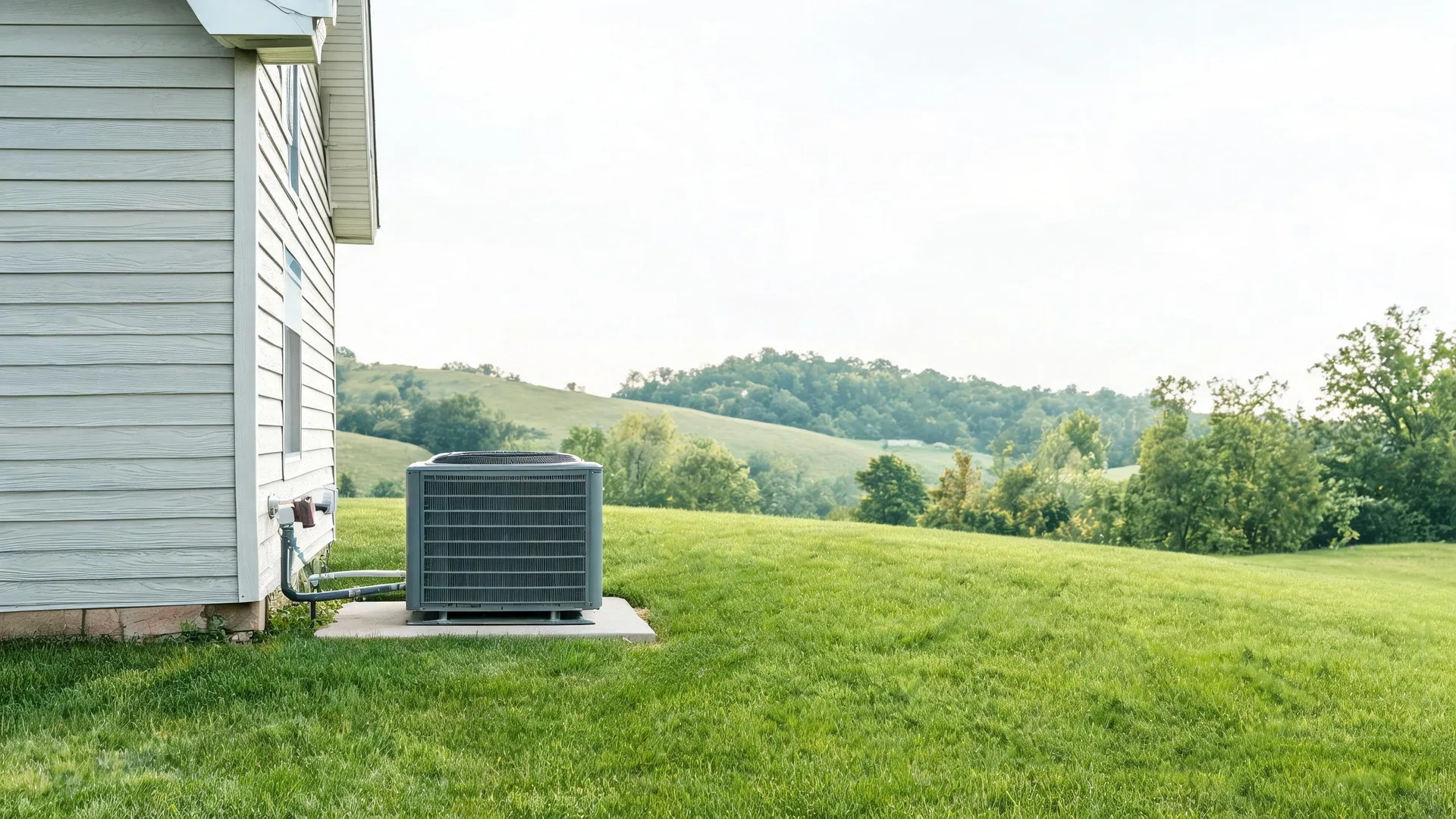
Between visits, the filter is the one thing worth your attention. A dirty filter chokes airflow across the indoor coil, and a heat pump leans on that coil year round, not just in summer. Check it monthly and swap or clean it when it looks gray instead of white. Outside, keep the area around the outdoor unit clear so air can pull through the coil freely. Walk past it after storms and brush off leaves or grass clippings, but leave the cabinet closed. Inside the house, make sure furniture or curtains aren't blocking the supply and return vents, since a heat pump moves a lot of air and needs a clear path.
A clogged filter makes the indoor coil run colder than it should, and in heat mode that same coil has to pull warmth out of the outside air.
When the outdoor coil stays dirty too, the heat pump loses both ends of that exchange, and it will run long hours just to keep up.
A heat pump here works both ends of the year, so book the check in April and again in October




A quick visit means someone glances at the outdoor unit, checks the pressure, and leaves. A thorough one means the reversing valve gets tested in both directions, not just the one it happens to be sitting in that day. The tech should pull the blower wheel or at least look at it, since dust builds up on the blades and that cuts airflow the same way a dirty filter does. The contacts in the outdoor disconnect should get checked for corrosion, and the capacitor should get tested under load rather than just eyeballed. Refrigerant charge matters more on a heat pump than on a straight air conditioner, because the system depends on hitting the right charge to work efficiently in both directions. If nobody checks the defrost cycle, that's a sign they're moving fast rather than being thorough.
Book it before the season
It starts running hard in the first month of the season here. Book the check the month before.
Find a contractor

It never gets the off season a furnace or an AC gets
A heat pump doesn't get a season off. It runs on the heating side, then switches over and runs on the cooling side, and the reversing valve, the compressor and both coils are working through all of it. Skip a year of maintenance and nothing fails right away. The compressor just starts working harder than it needs to, pushing against a weak charge or a coil caked with dust, and heat builds up in places it shouldn't. That wear doesn't show up as a breakdown the first season, or even the second. It shows up as a compressor that dies years before it should, because nobody caught the low charge or the clogged coil that was making it strain the whole time.
A tune-up turns up things you'd never spot from inside the house. A tech with gauges can see a refrigerant charge that's running low before it ever shows up as warm air from the vents, since a heat pump a few ounces short will still blow air, just not at the temperature it should. The contactor and capacitor get tested under load, not just looked at, because a capacitor can measure fine sitting still and still fail the moment the compressor tries to start. Pulling the blower wheel shows buildup on the blades that chokes airflow the same way a dirty filter does, but you'd never see it without opening the cabinet. The defrost sensor and control board get checked too, since a heat pump that can't sense frost on the outdoor coil will either ice over or run a defrost cycle it doesn't need, and either way it's working against itself without you knowing.
A proper tune-up starts with the coils, indoor and outdoor, and both get washed, not just hosed off, because packed-in dirt works like insulation and blocks the heat exchange the whole system depends on. Static pressure gets checked across the system, which tells you if the ductwork itself is choking airflow in a way no filter change will fix. The condensate drain gets cleared too, since a clogged drain backs up and can shut the system down or let water sit where it shouldn't. Electrical connections get tightened, because a loose wire under load generates heat at that connection point, and that's a spot where something can fail outright. Skipping any one of these leaves a weak point that the rest of the system has to work around.