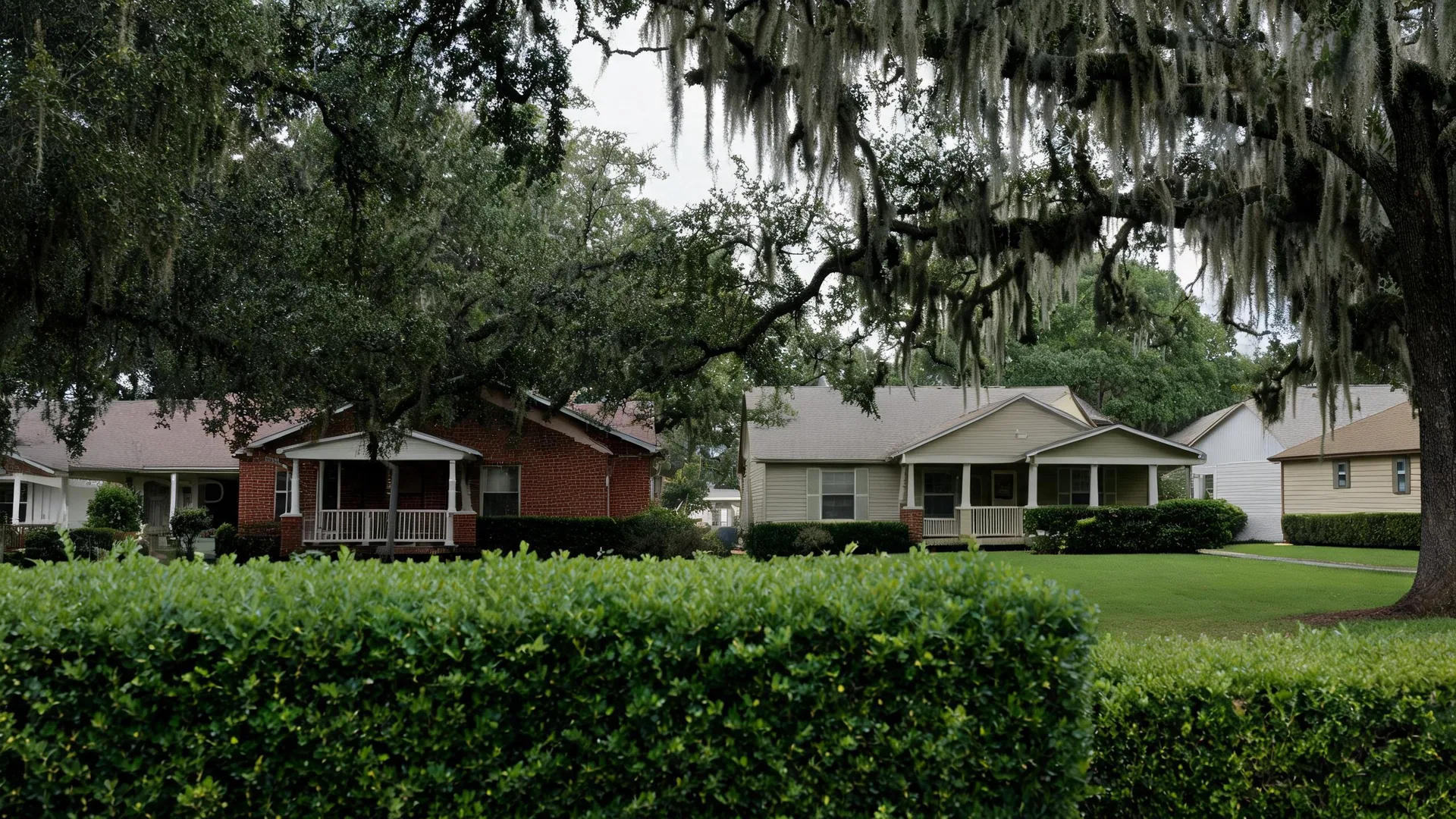





Single-story houses with covered porches, one brick and one light-colored siding, behind a trimmed hedge and lawn, beneath large oak trees draped with Spanish moss.

Heat Pump Installation in Thibodaux, LA

Tell us about the job

Takes about a minute. No obligation.

New system or replacementHeat PumpLafourche Parish, LA
Step 1 of 2

What ZIP code is the job in?

Ask what the sizing is based on, not just the square footage but a load calculation that looks at your windows, your insulation, and how many rooms the ductwork has to reach. A unit too big cycles on and off and never pulls the humidity down. One too small runs constantly and still can't keep up on the coldest mornings. Ask what happens below freezing, since a heat pump leans on backup heat strips or a furnace once the outdoor air gets cold enough, and you want to know at what point that switch happens and how it's controlled. Ask about the compressor type, because a variable-speed unit holds steady and runs quieter than one that's only on or off. And ask who services the brand locally, since a system nobody nearby can get parts for is a problem waiting to happen.

4 months
November through February, your system heats
7 months
April through October, it cools
47°F
the average winter night it heats against
90°F
the average summer afternoon it cools against
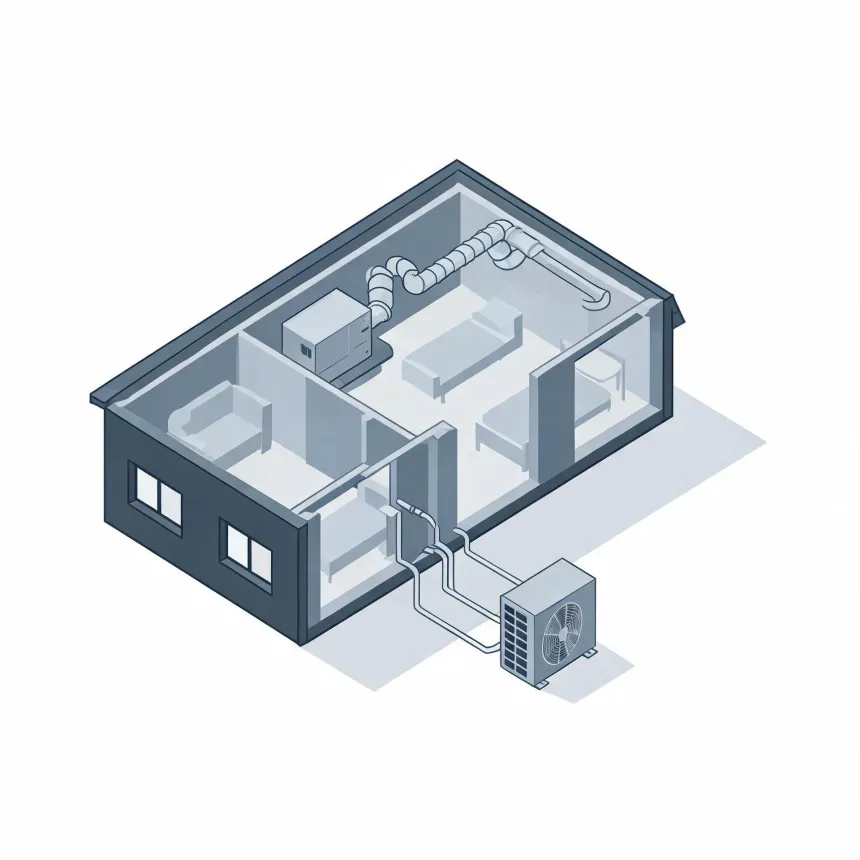
Isometric cutaway illustration of a small house showing interior rooms with furniture, an indoor air handler with flexible ducting, and refrigerant lines running to an outdoor condenser unit beside the building.
Your system heats November through February and cools April through October.

NOAA nClimDiv, 1991–2020 normals

67.6% of homes in Lafourche Parish already heat with electricity.

A heat pump fits that setup without asking for a gas line or a new fuel source.

Get a heat pump in before April, not after the first hot week

Cooling runs April through October
Heat runs November through February
Power costs 11.73 cents a kWh statewide
Sized for your house, nothing moreHalf the homes here were built in 1982 or earlier, half since. Standard sizing fits either way.

Electricity here runs 11.73 cents a kilowatt-hour, cheaper than most of the country. That changes the math on a heat pump. The highest efficiency model on the lot costs more up front and takes longer to earn that back, since there's less of a bill to shrink in the first place. That doesn't make efficiency pointless, it just means it shouldn't be the only thing you're deciding on. Ask about the warranty, how the compressor holds up, and whether parts are easy to get locally. A system that keeps running through a storm outage is worth more here than one that saves a few dollars a month.

Any new system here has to clear 14.3 SEER2

Lafourche Parish falls under the Southeast's efficiency rule, not just the national one. A split-system heat pump installed now has to hit 14.3 SEER2 for cooling and 7.5 HSPF2 for heating. That floor is already set before you start comparing units, so the question is which one clears it best for your house.

Find a contractor
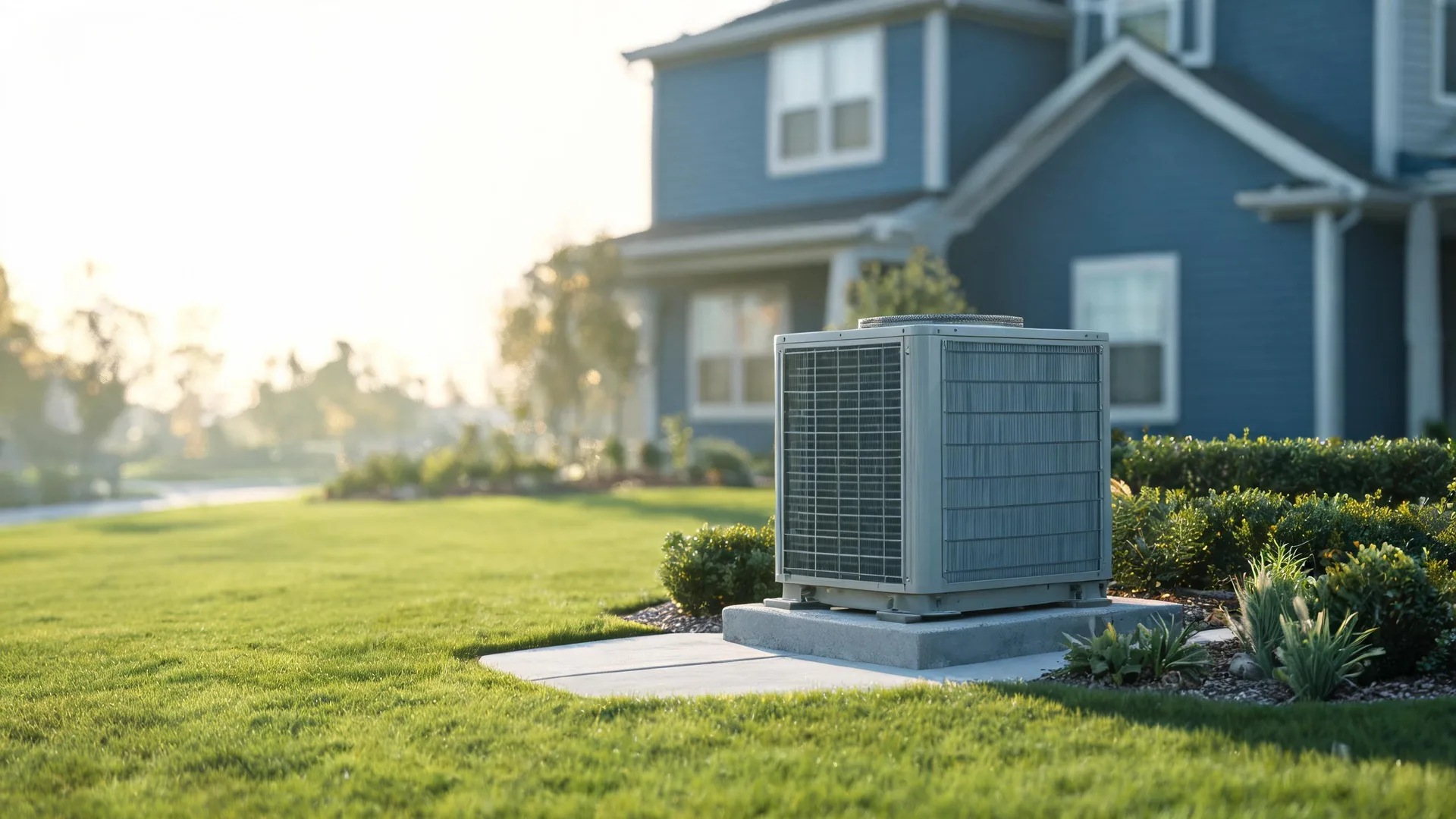
A gray air-source heat pump mounted on a concrete pad next to a house with gray vinyl siding, surrounded by gravel and flanked by green shrubs and white hydrangea flowers.

The rating is a season, not a moment

SEER2 and HSPF2 are not one number. SEER2 rates cooling. HSPF2 rates heating. Both get measured over a full season of runtime, not one setting on one afternoon. A unit earns that rating by running through mild days and harsh ones, short cycles and long ones, then averaging it out. A higher rating usually means the compressor can slow down and hold steady output instead of just switching on and off. That matters because the unit spends most of its life running at partial load, not flat out. The number on the label is what the equipment hit under test conditions. What it delivers in a house depends on the ductwork it runs through and whether the installer matched the size of the unit to the size of the job.

The equipment is one line on the invoice

The outdoor unit and indoor coil are a known cost once you've picked the size and efficiency tier. What varies job to job is everything around them. Line sets, electrical work, a new thermostat, changes to the plenum. Houses getting the same heat pump can land on different totals because of what else the job needs.
Ductwork decides how much labor this takes

If the existing ducts are sized right and in good shape, a crew can often reuse them, and the job stays close to a straight swap. If the ducts are undersized, leaky, or routed poorly, bringing them up to what the new system needs is its own project. That work happens before the heat pump ever gets set. Worth asking about during the quote, not after.

If the old system is a straight AC and furnace, both get disconnected. The furnace gets drained of refrigerant lines tying to the old coil, and the coil itself comes out of the plenum along with the outdoor condenser. A heat pump replaces both jobs with one outdoor unit, so the furnace isn't left in place as a backup unless there's a reason to keep gas heat on standby. If the home runs on electric resistance heat strips alone right now, those often get pulled too, since the heat pump takes over and the strips only stay for backup on the coldest mornings. The old refrigerant gets recovered, not vented, that's a legal requirement, not a courtesy. Whatever's hauled out, ask where it's headed. Scrap yards take the metal, and the compressor and coil have resale value as scrap even if the unit's done as equipment.

The crew shows up with the outdoor unit, the indoor coil, and whatever ductwork or electrical changes got scoped during the quote. The old equipment comes out first. Then the line set gets run between the outdoor unit and the indoor coil, and that line set gets evacuated to pull all the air and moisture out before any refrigerant goes in. A system charged on top of trapped air and moisture won't hold its rating no matter how good the equipment is. Electrical work happens alongside that, since a heat pump often needs a different disconnect or breaker than what the old system used. Once everything's connected, the crew checks refrigerant charge, confirms airflow across the coil, and sets up the thermostat before walking through how the backup heat switches on. The system should be heating and cooling the house by the time they leave, not just powered on.