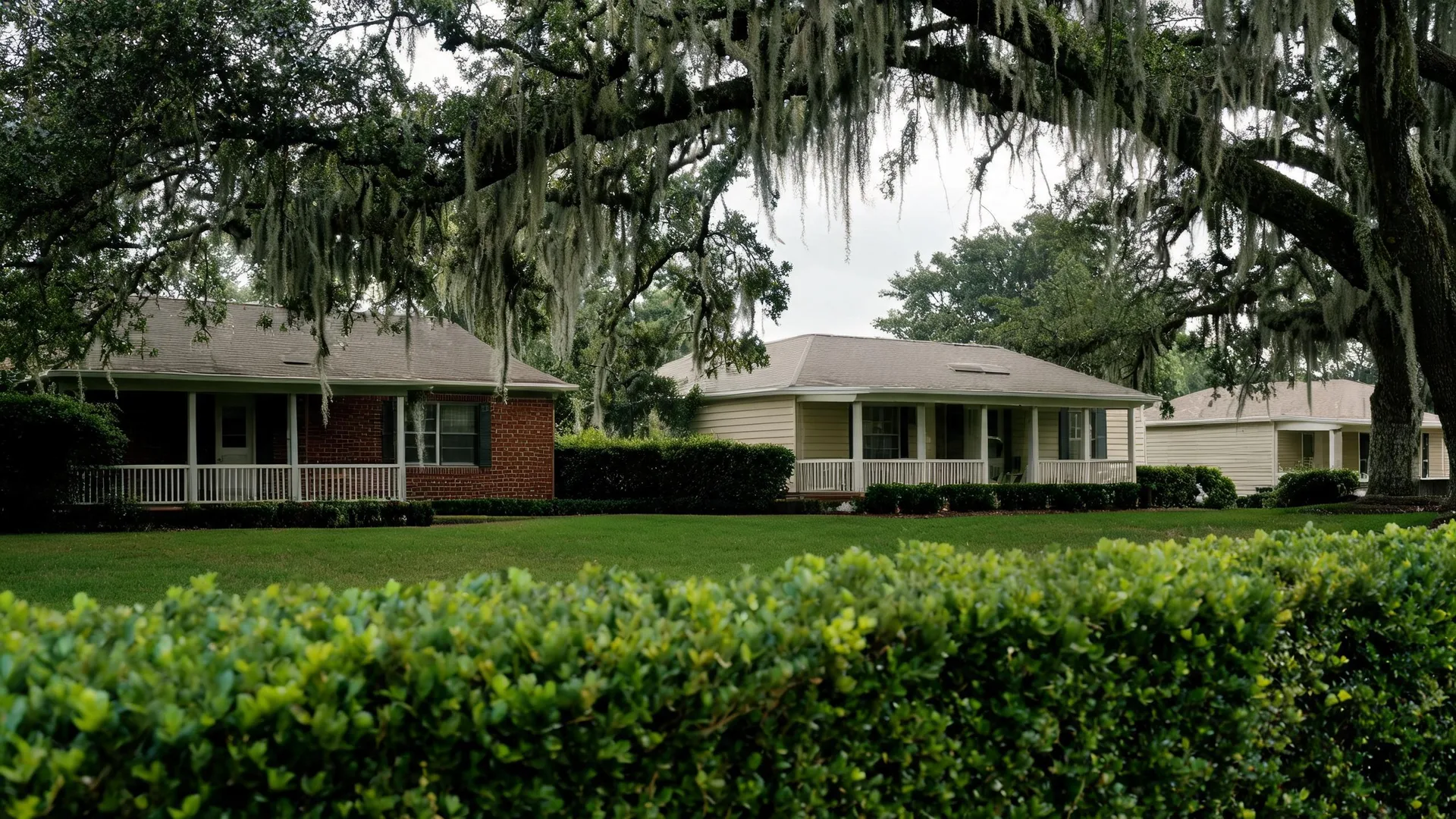
Single-story houses, one brick and one with light siding, both with covered porches, behind a mowed lawn and trimmed hedge, under large moss-draped oak branches.

Heat Pump Installation in Slidell, LA

Tell us about the job

Takes about a minute. No obligation.

New system or replacementHeat PumpSt. Tammany Parish, LA
Step 1 of 2

What ZIP code is the job in?

Wind and hail come with the territory

St. Tammany Parish saw 88 damaging wind events and 24 hail events in the past ten years. A heat pump's outdoor unit sits outside year round, so where it goes and what shields it matters here more than in most places.


Power doesn't always come right back

Close to half of Louisiana households lost power for 24 hours or more in 2024. A heat pump needs electricity to heat or cool, so an outage takes the whole system down. Worth asking about backup heat or power options before you decide on a system.

5 months
November through March, your system heats
7 months
April through October, it cools
43°F
the average winter night it heats against
91°F
the average summer afternoon it cools against
Isometric line illustration of a cutaway single-story house showing interior ductwork, an indoor air handler unit, and an outdoor condenser connected by refrigerant lines, with a dark shingled roof.
Your system heats November through March and cools April through October.

NOAA nClimDiv, 1991–2020 normals

Electricity heats 61.9% of homes in St. Tammany Parish, more than any other fuel.

A heat pump runs on that same fuel, so swapping in one means no new gas line or propane tank to deal with.

Power here runs 11.73 cents a kilowatt-hour, cheaper than most of the country, so a heat pump still earns its keep without needing the priciest model on the lot

Power costs 11.73 cents a kWh statewide
Climate zone 2A
Cooling runs April through October

A heat pump here works year round, not just one season. November through March it's the only heat in the house, and April through October it's the air conditioning too, so there's no slow month to sneak a replacement in before things get busy. Fall before the cold sets in is the easier window. October is the last quiet stretch before homes switch over to heat in November, and the installer isn't racing a system that's already failed on a cold night. Wait until the first cold snap and you're choosing a new system under pressure, from whatever is in stock, instead of picking the one that actually fits your home.

A new heat pump here has to clear this region's efficiency minimum

Slidell sits in climate zone 2A, where cooling carries most of the load, and any heat pump installed here has to hit 14.3 SEER2 and 7.5 HSPF2 at minimum. A federal tax credit is available on qualifying equipment, so it's worth seeing which systems clear the regional bar and qualify before picking one.

Find a contractor
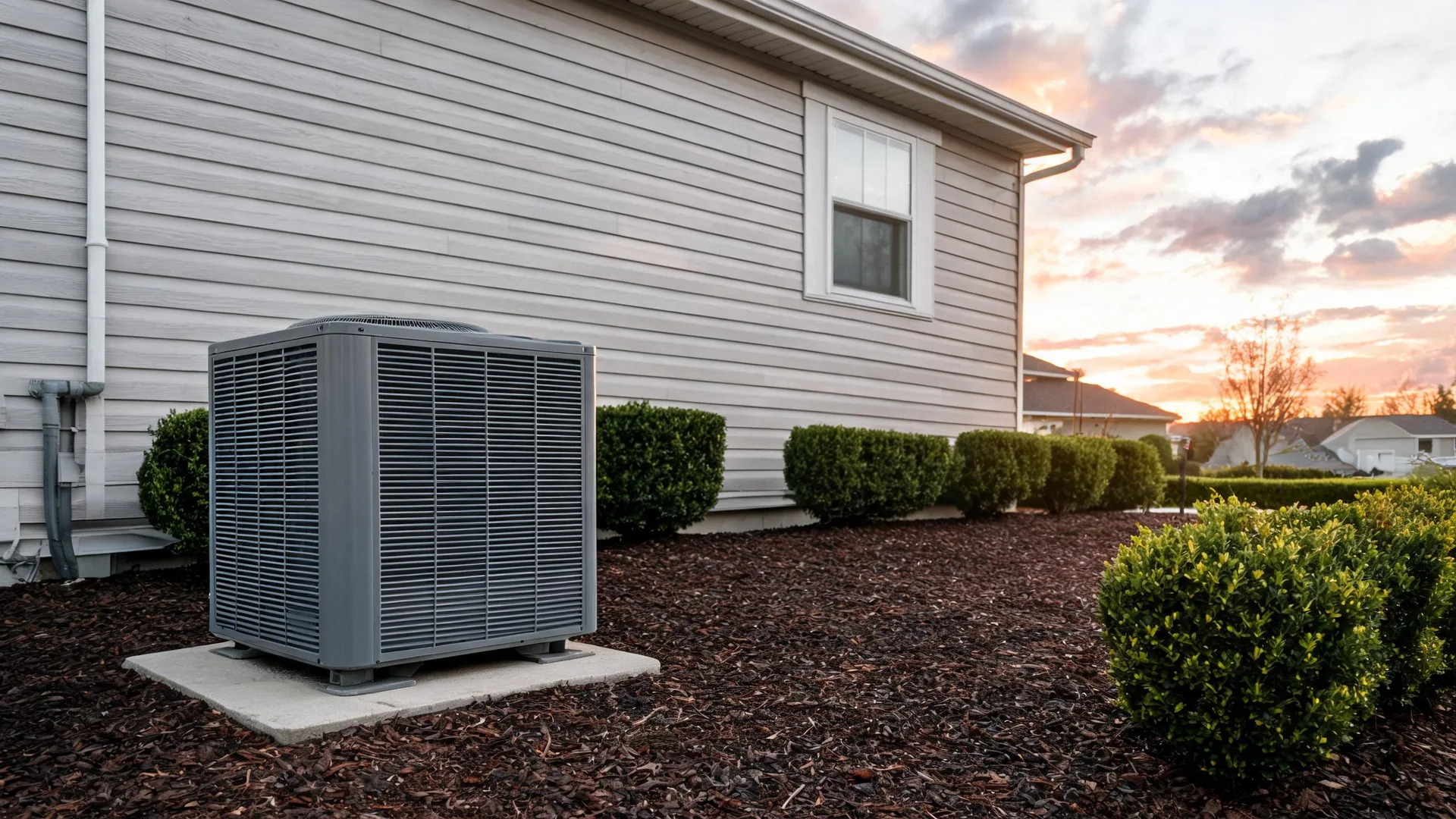
A gray heat pump outdoor unit mounted on a concrete pad next to the stone-accented exterior wall of a house.

The old equipment doesn't just sit there when the new one goes in

Whatever is running now doesn't just get unplugged and left. The old outdoor unit gets disconnected, the refrigerant lines get recovered, not vented, and the unit comes out along with the old indoor coil if your ductwork is being reused. If the new system uses the same duct layout, the installer checks it against the new equipment, a blower matched to the wrong ducts just makes a bigger pressure problem than the one you had. Anything still working gets hauled off and recycled for the metal and copper rather than landfilled whole. If the old system had a backup element or a furnace paired with it, that gets sorted out too, sometimes it stays as backup heat, sometimes it goes.

Sizing the system is the real work

A heat pump has to match the house it's going into, the square footage, the window count, how much shade the walls get. An installer works this out with a load calculation, not a guess based on what was there before. Too big and the system short cycles, turning on and off without ever running long enough to dry the air out right. Too small and it runs constantly and still can't keep up on the coldest or hottest days. Getting this number right shapes everything else about the job, from the equipment chosen to how long installation takes.

What's already there changes the job

If the ductwork fits the new equipment and the electrical panel has room for the new circuit, installation is straightforward, the crew swaps equipment and connects it. If the ducts are undersized for the new blower or the panel needs upgrading to handle the unit's electrical draw, that work has to happen first. The line set path between indoor and outdoor units matters too, a longer run or an awkward route through walls and framing adds time. None of this shows up until someone looks at the actual house, which is why homes needing a similar size system can still end up with different scopes of work.

A load calculation looks at square footage, window count, insulation and shade, then works out how much heat the house actually loses in winter and gains in summer. Square footage alone doesn't answer that. Homes the same size can lose heat at very different rates depending on how many windows they have and which way those windows face. The calculation accounts for all of it, and the equipment gets matched to that specific result. A system sized off the old one, or off a rule of thumb, skips this step and just guesses. Short cycling wears out a compressor faster than steady runtime does, so getting the size right isn't just about comfort. It's about how long the equipment lasts.

Installation day starts with the outdoor unit and indoor coil coming into position, then the refrigerant lines get run between them and connected. Those joints get brazed, not just fitted together, and then the whole line set gets pressure tested before any refrigerant goes in. A vacuum pump pulls moisture and air out of the lines next, because any left behind turns to acid or ice inside the system and wears it out early. Only after that passes does the system get charged, and the charge gets checked against what the equipment actually calls for rather than just filled until a gauge looks right. Electrical work happens alongside this, running the new circuit and setting the thermostat, and the crew tests heating and cooling modes before they leave. None of it can be rushed, since a system charged wrong or installed on a line set that still has air in it will run worse from the first day, not just eventually.