Cooling and heating get their own number
SEER2 covers cooling, HSPF2 covers heating. A model can be strong on one and average on the other, so check both before weighing price. They're listed side by side on the label for that reason.
Takes about a minute. No obligation.
Ask what the unit is rated for in cold weather, not just how well it cools. Every heat pump loses capacity as the outdoor temperature drops, and the point where it needs backup heat to keep up varies a lot between models. Ask what kind of backup heat comes with it and how the system decides to use it, since some switch over earlier than they need to and run up the cost of keeping the house warm. Ask about the sound rating too, especially if the outdoor unit will sit near a window or a patio. And ask who is sizing the system, and how. A unit that's too big will short cycle, turning on and off more than it should, and one that's too small will run constantly and still struggle on the coldest days. The right size comes from a load calculation on the house, not a guess based on square footage.
NOAA nClimDiv, 1991–2020 normals
Electricity heats 52.6% of homes in Lincoln Parish, more than any other fuel.
A heat pump replacing electric heat fits wiring and ductwork already built for it.




Ruston is zone 3A, warm most of the year with only a short mild winter. Any heat pump installed here new has to hit 14.3 SEER2 for cooling and 7.5 HSPF2 for heating at minimum. Central air systems under 45,000 Btu/h have to clear that same 14.3 SEER2 mark, which is higher than what the rest of the country requires. That narrows which models can go in, but a heat pump that meets it can also qualify for a federal tax credit, worth checking before you settle on one.
Replace it before the season starts, so it happens on your schedule, not in a hurry.
Find a contractorWhatever is coming out, the old system doesn't get left in place behind the new one. A heat pump doubles as the cooling system, so pulling it out means disconnecting both the refrigerant lines and whatever backup heat it was paired with. If it's a straight swap, the install crew can usually run the new lines through the same wall penetration and reuse the pad outside. The old refrigerant gets recovered, not vented, that's a federal requirement, and the unit itself gets hauled off for scrap or disposal. If the old system was a straight electric furnace or baseboard heat with separate window units for cooling, there's more to remove, and more old wiring and ductwork for the installer to check before the new system can tie into it.
SEER2 covers cooling, HSPF2 covers heating. A model can be strong on one and average on the other, so check both before weighing price. They're listed side by side on the label for that reason.
SEER2 and HSPF2 are measured under set test conditions, not inside the walls or ducts the system will actually run through. A high rating on a system that's sized wrong or tied into leaky ducts won't deliver what the label promises. The number tells you what the equipment is capable of, not what the house will get out of it.
A load calculation looks at the whole house, not just the floor area. It accounts for the windows and which way they face, the ceiling height, how much insulation is in the attic and walls, and how much air leaks in around doors and gaps. Houses the same size on paper can need different sized systems because of this. Oversizing is the more common mistake, since it feels safer to go bigger, but a heat pump that's too large cools or heats the air fast and shuts off before it pulls moisture out of the house, so the air feels clammy even at the right temperature. It also cycles on and off more than it should, and those start-stop cycles wear on the compressor over time. A correctly sized system runs longer, steadier stretches, which is what actually keeps a house comfortable.
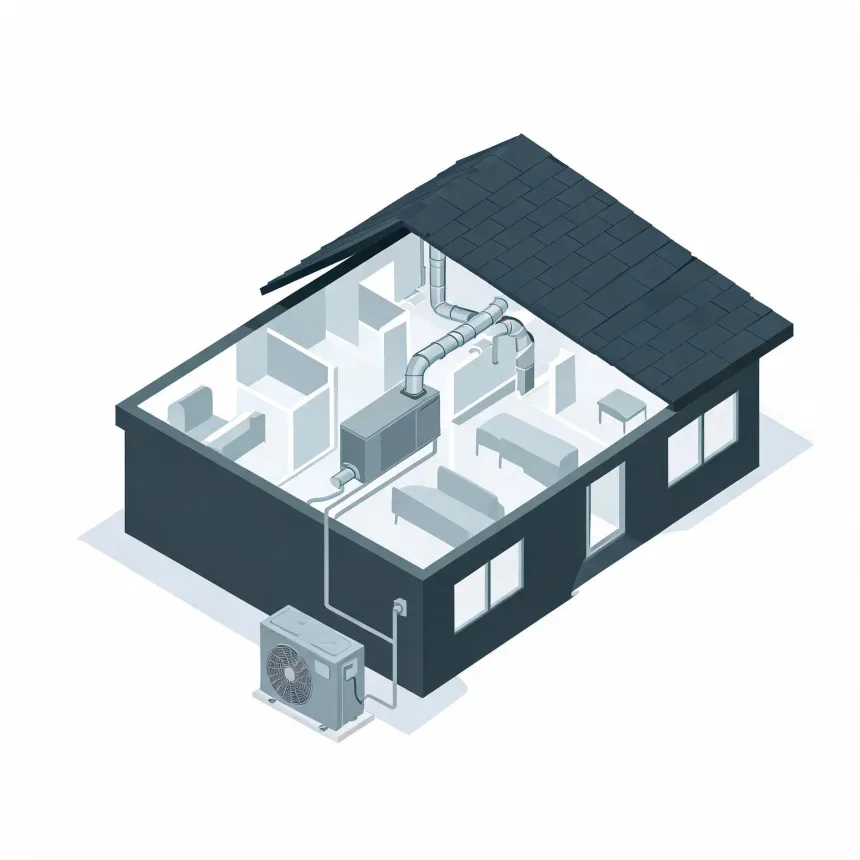
Installation day starts with the outdoor unit and the indoor coil, and most of the time goes into things you won't see once it's buttoned up. The refrigerant lines get run and brazed, then the whole system gets pressure tested and pulled down into a vacuum before any charge goes in. That vacuum step pulls out moisture and air that would otherwise ruin the compressor, and it takes time to do right. The electrical hookup is its own piece of work too, since a heat pump needs power run to both the outdoor unit and the air handler, plus whatever the backup heat calls for. Once it's running, a good installer checks the refrigerant charge against the manufacturer's numbers and checks airflow at the vents, not just whether the unit turns on. A system that fires up but never gets charged and checked properly will run, just not the way it's supposed to.