





Single-story houses with covered porches sit behind a mowed lawn and a long trimmed hedge, framed by oak branches draped with Spanish moss.

Heat Pump Installation in New Roads, LA

Tell us about the job

Takes about a minute. No obligation.

New system or replacementHeat PumpPointe Coupee Parish, LA
Step 1 of 2

What ZIP code is the job in?

Electricity heats 56.7% of occupied homes in Pointe Coupee Parish, and a heat pump fits right into that setup. Utility gas is next at 42.0%, so gas furnaces are common too, but electric is still what most of your neighbors have. If your home already heats with electricity, a heat pump replaces that system without asking for anything new, no gas line to add, no new venting. It handles both heating and cooling from the same unit, which matters here since the AC runs for a good part of the year too.

5 months
November through March, your system heats
7 months
April through October, it cools
42°F
the average winter night it heats against
92°F
the average summer afternoon it cools against
Isometric line illustration of a cutaway single-story building showing interior rooms, ceiling ductwork, an indoor air handler, and an outdoor condenser unit connected by refrigerant lines.
Your system heats November through March and cools April through October.

NOAA nClimDiv, 1991–2020 normals

Half the homes in Pointe Coupee Parish were built in 1985 or earlier, half in 1985 or later.

A heat pump sized to your house, not its age, is what this job calls for.

Cheap power here means payback matters less than picking the right system

Power costs 11.73 cents a kWh statewide
Climate zone 2A
Cooling runs April through October

March is the month to get a heat pump installed here, right before cooling starts in April. Wait until the first hot week and you're choosing a system under pressure, or running window units while you wait on a crew. Installing before the season also means it's tested and running normal before it has to carry a full load. Heat pumps here work hard both ways, cooling from April through October and carrying heat come November, so there isn't really a slow season to tuck the job into. March is the gap between one season ending and the next starting, and that's the window.

A standard heat pump, installed right, is what this parish needs

Pointe Coupee has had its share of severe weather, 36 events over the past decade, mostly wind damage, with a handful of tornadoes and hail mixed in. None of that changes what a heat pump needs to be here. A properly sized, standard-efficiency system handles this climate fine. The bigger risk is the power going out, which happened to about half of Louisiana households for at least a day in 2024. That's worth planning around with backup heat or surge protection, not a reason to oversize the unit itself.

Find a contractor
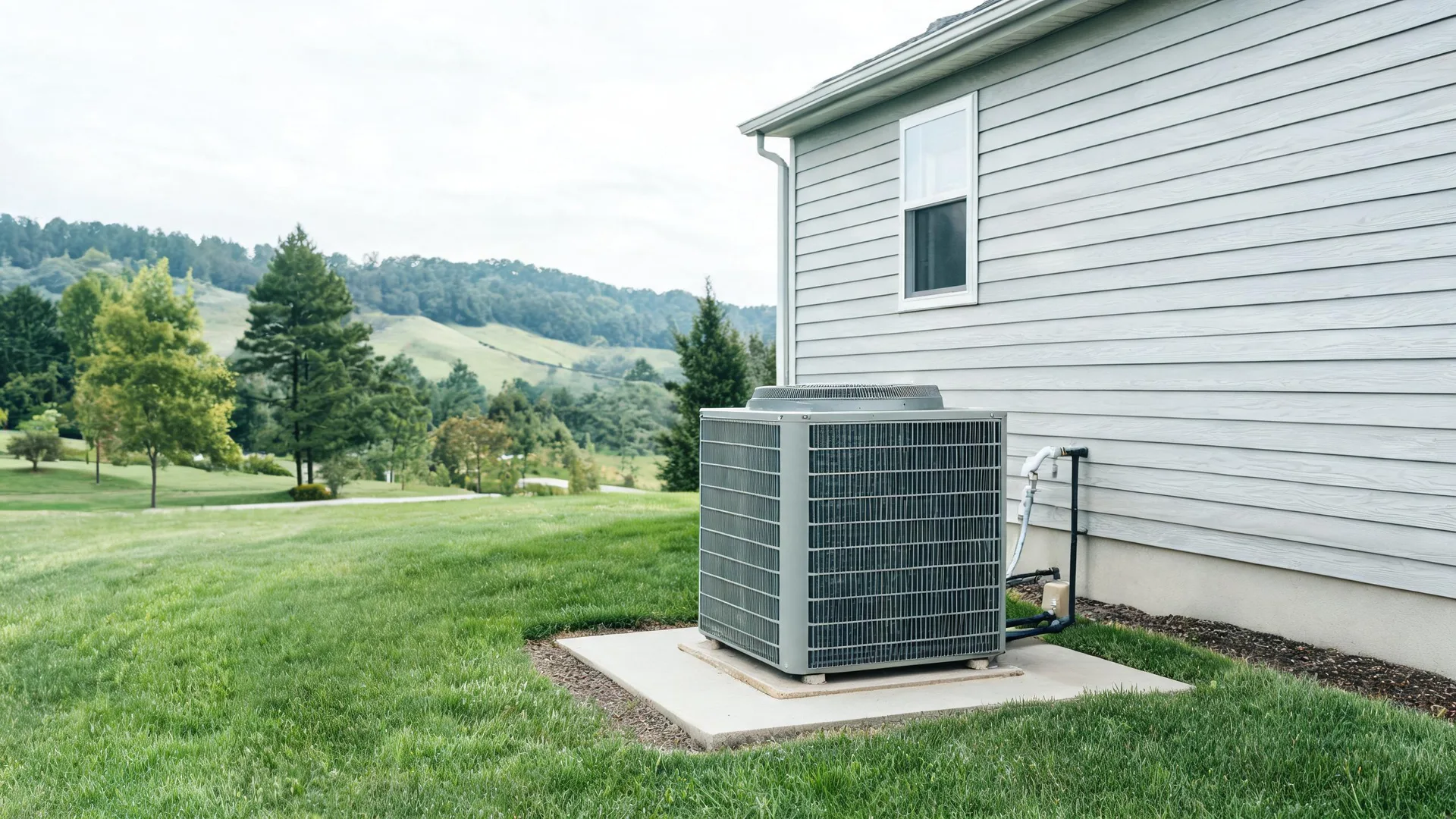
A gray heat pump condenser unit mounted on a concrete pad against the gray lap-siding exterior wall of a house.

Sizing is a calculation, not a guess

A heat pump has to be sized against your home's heat loss and heat gain, not picked off a chart by square footage alone. That means a contractor measuring your walls, windows, ceiling height and insulation, then working out how fast the house loses heat on the coldest days and gains it on the hottest ones. Oversize it and the unit short cycles, running in quick bursts that cool or heat the air but never run long enough to settle the humidity or heat the house evenly. Undersize it and it runs flat out during the worst weather and still can't keep up. Either mistake shortens the life of the compressor, since it's the part working hardest every time the system starts and stops. A unit sized right runs longer, steadier cycles, which is what actually keeps a house comfortable and keeps the equipment lasting as long as it should.

The ductwork decides more than the unit does

If the ducts are undersized, leaky, or routed poorly, a contractor has to fix that before the heat pump can do its job. Sealing joints, adding returns, or resizing a trunk line is real labor and material, separate from the equipment itself. A heat pump that runs quiet and even depends on air moving through the house the way it was designed to, not just a good compressor sitting outside.
A heat pump costs more than a straight air conditioner

A heat pump has to manage refrigerant flow in both directions and run a reversing valve, and it often needs auxiliary heat strips or a backup source for the coldest stretches. A straight air conditioner only ever moves heat one way. That extra work the equipment has to do is built into its cost before a contractor runs a single foot of wire or pipe.

Taking out the old equipment is part of the job, not an extra step tacked on. The old condenser gets disconnected and hauled off, and if there's an old air handler or furnace paired with it, that comes out too, along with any line set that isn't being reused. Refrigerant in the old system has to be recovered properly, not vented, so a contractor brings the equipment to do that safely. If the switch is from a gas furnace to a heat pump, the old gas line gets capped off correctly rather than left live behind a wall. Any electrical whips or disconnects sized for the old unit usually need to be swapped too, since a heat pump draws power differently than what was there before.

Install day starts with the old system coming out, then the new pad or bracket going in for the outdoor unit. Line sets get run between outdoor and indoor units. If the ducts need sealing or a return added, that work happens before anything gets charged with refrigerant. Electrical comes next, a disconnect box, new wiring sized for the heat pump, sometimes a dedicated circuit for backup heat strips. Once everything is connected, the system gets charged to the exact refrigerant level the manufacturer specifies, not just topped off by feel. The last part is airflow, checking that every room is getting what it should, then running the system through both a heating and cooling cycle before anyone calls it done. A straightforward swap can wrap in a day. Add ductwork repairs or electrical panel work and it runs longer, since that is real construction, not just bolting on a new box.