






A red brick single-story house with a covered porch and adjacent cream-sided houses behind a trimmed hedge and lawn, framed by large oak trees draped with Spanish moss under an overcast sky.

Heat Pump Installation in Marksville, LA

Tell us about the job

Takes about a minute. No obligation.

New system or replacementHeat PumpAvoyelles Parish, LA
Step 1 of 2

What ZIP code is the job in?

Taking out the old system is part of the job, not an extra step. A contractor will disconnect the power and recover the refrigerant from the lines before anything gets unbolted, since that refrigerant can't just be vented into the air. The old outdoor unit and indoor coil come out, and if the new heat pump uses a different refrigerant or different line size, the old line set usually comes out too rather than getting reused. Some installers hold onto working parts or scrap the metal, so ask what happens to yours. If you're switching from a furnace setup, the old furnace may stay in place as backup heat or come out entirely, depending on how the new system is designed.

5 months
November through March, your system heats
7 months
April through October, it cools
41°F
the average winter night it heats against
92°F
the average summer afternoon it cools against
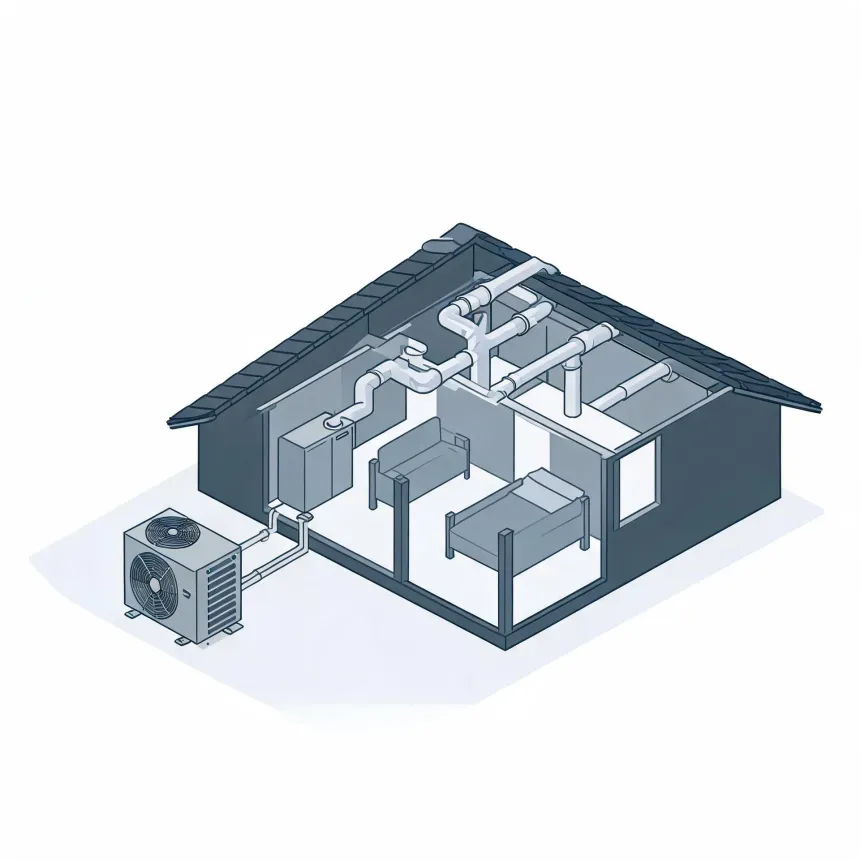
Isometric cutaway illustration of a house showing interior ductwork, an indoor air handler, and beds, with an outdoor condenser unit connected by lines outside the wall.
Your system heats November through March and cools April through October.

NOAA nClimDiv, 1991–2020 normals

More than half the homes in Avoyelles Parish already heat with electricity.

A heat pump fits that setup without asking the house to change how it gets its heat.

Put a heat pump in before March, and it's running cool by the time anyone needs it

Cooling runs April through October
Heat runs November through March
Power costs 11.73 cents a kWh statewide
Built for Marksville powerLouisiana homes paid 11.73 cents per kilowatt-hour in 2024, among the lowest rates in the country

The size of the heat pump matters more than almost anything else on the invoice. One that's too big for the house will short cycle, turning on and off before it ever settles into a steady rhythm, and that wears on the compressor. One that's too small will run constantly and still struggle on the coldest days. Getting the size right means a contractor has to calculate the heat loss and heat gain for the house, not just match the old system's tonnage. Ductwork plays into it too. If the existing ducts are undersized or leaky, a heat pump moving the volume of air it needs will fight that duct run every time it cycles on, and that fight shows up in how hard the system has to work. Where the outdoor unit sits, how much line set has to run between indoor and outdoor, and whether any electrical panel work is needed to support it all add their own weight to the job.

A new heat pump here has to meet zone 2A's efficiency minimum, and a federal credit can offset it

Any heat pump installed here now has to hit 14.3 SEER2 for cooling and 7.5 HSPF2 for heating, and for a system under 45,000 Btu/h that cooling minimum is already set by zone 2A, not just the federal floor. That narrows the field to equipment built for this kind of heat and humidity. A federal tax credit is available on qualifying installations, worth asking a contractor about when comparing units.

Find a contractor
A man in a dark long-sleeve shirt and tan work pants, seen from behind, carries a worn canvas tool bag up concrete steps toward a dark blue front door.
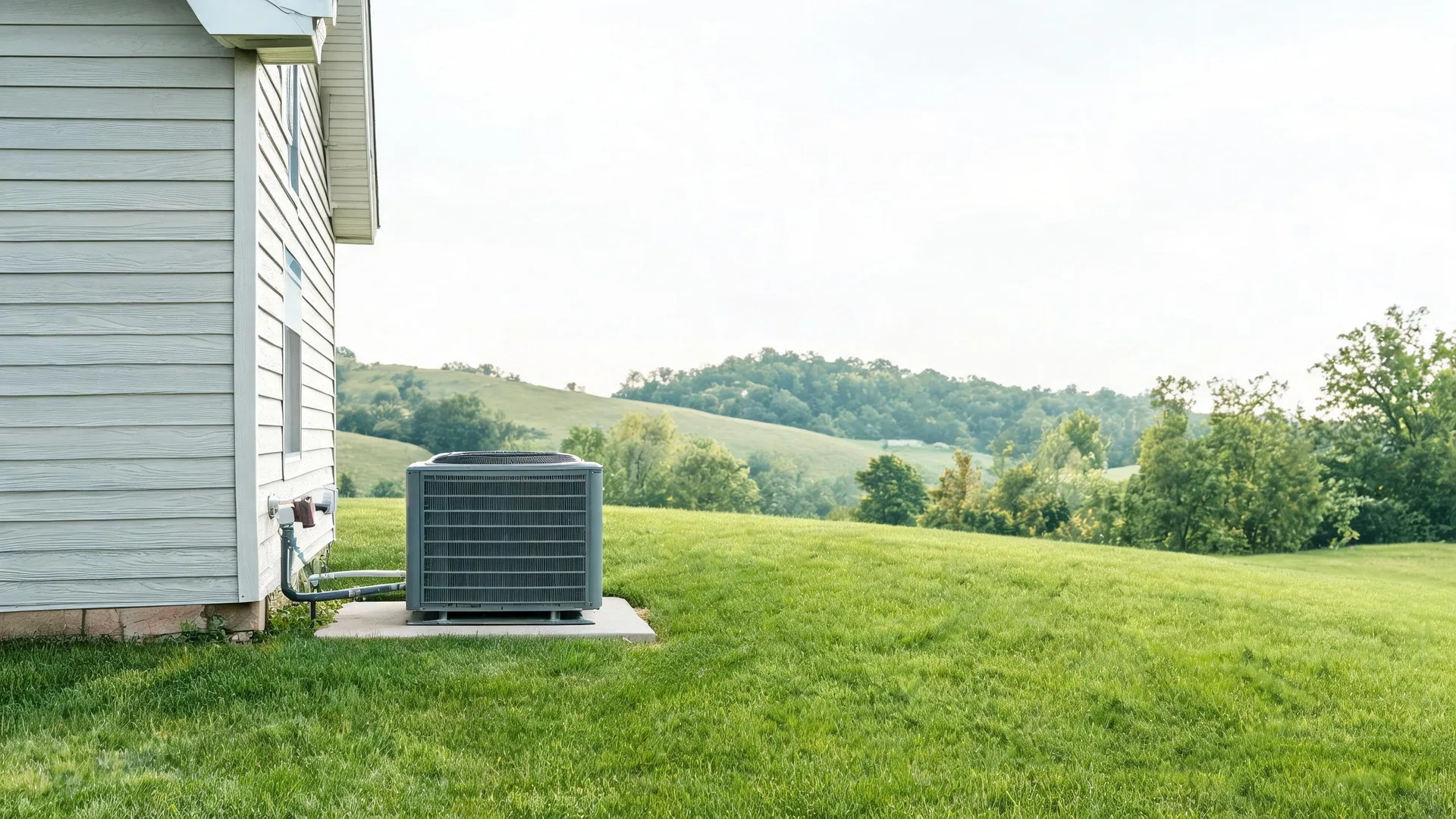
A white mini-split heat pump outdoor unit mounted on a concrete pad beside a gray-sided house, surrounded by gravel and green shrubs.

The label is a lab result, not a forecast for your house

The rating on the label comes from a lab test, not from your house. It tells you how the equipment performs under a fixed set of conditions, which makes it useful for comparing one unit against another. What it does not tell you is how the system will actually run once it is tied into your ductwork and your thermostat. A heat pump's efficiency drops as the outdoor temperature drops, which is why the cooling rating and the heating rating are tracked separately on the same label. A unit can look strong on the cooling number and still have to work harder than that number suggests on the coldest nights. Leaky ducts, a shaded outdoor unit, a thermostat that gets bumped around all change how hard the equipment works to hit the temperature you set, regardless of what the label promised in the lab. None of that makes the rating useless. It just means the label tells you what the equipment is built to do, not what your house will ask of it.

Ask what the compressor is rated to do in cold weather

Every heat pump loses capacity as the temperature outside drops, but not at the same rate. Some keep producing useful heat well into cold weather before backup heat has to step in. Others fall off sooner and lean harder on supplemental heat strips, which cost more to run than the compressor does. Ask where that balance point sits for the unit being quoted, not just what it does on a mild day.
Ask how parts and labor are covered down the road

Warranty terms vary by manufacturer, and they matter more once the unit has been running for years than they do on install day. Find out whether the warranty covers labor or just the part, and whether it transfers if the house sells. A compressor warranty means little if the contractor has to wait weeks on a replacement part, so ask how the manufacturer that installer works with handles that.

A contractor works out the right size with a load calculation, weighing square footage against window area, insulation, ceiling height and how many exterior walls the house has. It has nothing to do with what the old system was rated for. A house that was oversized the first time around will get an oversized recommendation again if the contractor just matches tonnage instead of running the numbers fresh. Square footage alone doesn't settle it either. Houses the same size can need different sized equipment depending on how much sun the windows get and how tight the building envelope is. The calculation accounts for that, which is why it takes more than a tape measure and a guess.

Install day starts with the site being set up before any equipment moves. The indoor coil and air handler or furnace connection get fitted first, since that work sets where the line set has to run to meet the outdoor unit. Running new line set means brazing the joints, then pressure testing the whole system to make sure there are no leaks before any refrigerant goes in. Once that holds, the system gets evacuated with a vacuum pump to pull out moisture and air, because either one left behind will damage the compressor over time. Only after that does the refrigerant get weighed in, charged to the exact amount the manufacturer specifies for that line length. The electrical hookup and thermostat wiring happen alongside this, and the whole system gets tested running in both heating and cooling before the crew leaves.