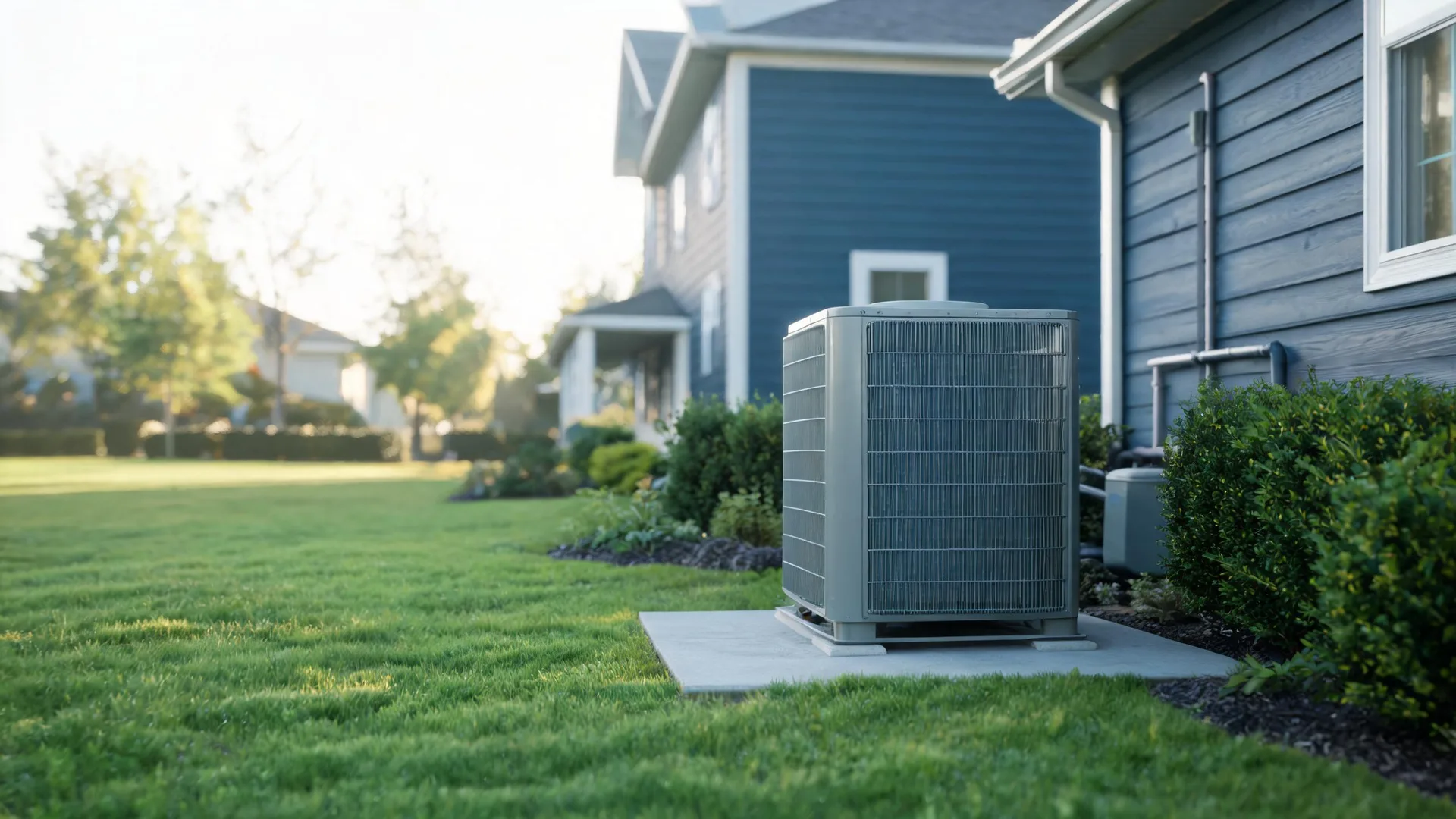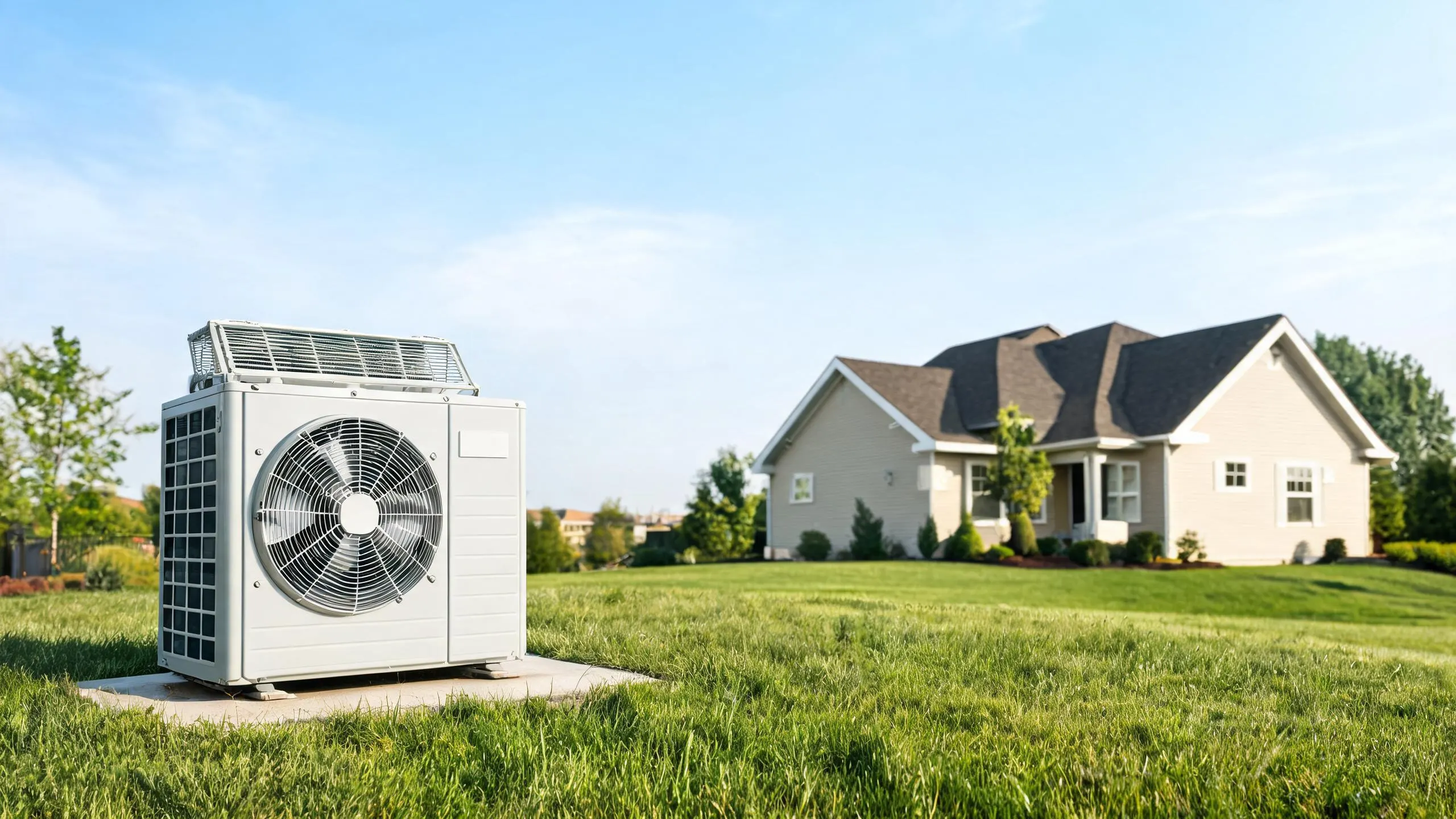
An outdoor air conditioning condenser unit mounted on a concrete pad in front of a single-story suburban house.

Heat Pump Installation in Luling, LA

Tell us about the job

Takes about a minute. No obligation.

New system or replacementHeat PumpSt. Charles Parish, LA
Step 1 of 2

What ZIP code is the job in?

St. Charles Parish sees its share of storms

45 severe weather events were recorded here between 2015 and 2024, including damaging wind, tornadoes, hail, and tropical storms or hurricanes. An outdoor heat pump unit sits right in the path of all of it.


The power doesn't always come right back

Almost half of Louisiana households went at least 24 hours without power last year. A heat pump runs on electricity, so when the power goes, so does the heat and the hot water until it's back.

4 months
November through February, your system heats
7 months
April through October, it cools
46°F
the average winter night it heats against
91°F
the average summer afternoon it cools against
Isometric cutaway illustration of a single-story house with a dark gabled roof, showing interior rooms with ductwork leading to an indoor air handler and an outdoor condenser unit connected by lines on the ground outside.
Your system heats November through February and cools April through October.

NOAA nClimDiv, 1991–2020 normals

Electricity heats 57.7% of homes in St. Charles Parish, more than any other fuel.

A heat pump replacing an electric system is going in where the wiring and layout already expect it.

A heat pump put in before March works through October before it has to handle its first cold night in November

Cooling runs April through October
Heat runs November through February
Power costs 11.73 cents a kWh statewide

Plan the installation around the outages, not just the weather

With storms hitting this parish this often, where the installer places the outdoor unit and how it's mounted matters as much as the equipment inside it. Ask about a stand or pad that keeps it clear of runoff and debris, and ask what backup heat kicks in when the power's out, since that's the gap a heat pump can't cover on its own.

Find a contractor
A man in a gray shirt and tan pants carries a worn canvas tool bag up porch steps toward a dark blue paneled front door, with a potted shrub beside the entry.
A gray heat pump outdoor unit mounted on a concrete pad next to the stone-accented exterior wall of a house.

Sized right, it runs long and slow. Sized wrong, it never settles down.

A heat pump sized right for the house runs long, slow cycles. It comes on, moves heat for a while, and tapers off rather than snapping shut. That slow rhythm is what pulls moisture out of the air in summer and keeps rooms even in winter. Oversize the unit and that rhythm never happens. It blasts the house to temperature fast, shuts off, then sits idle until the thermostat calls again. Each start draws a jolt of current and wears on the compressor, and the runs never last long enough to dehumidify the air. Undersize it and the opposite happens. The unit runs nearly nonstop on the coldest or hottest days and still can't catch up to the thermostat. Neither mistake shows up on the showroom floor. It shows up later, in a house that feels clammy in summer or never quite warm in one room all winter. The fix is sizing the equipment to the house itself, not to the system it's replacing and not to a rule of thumb based on floor space. Insulation, window area, duct layout, and air leakage all change how fast a house loses or gains heat, and houses that look alike from the outside can need very different equipment.

The rating is a lab number, not a promise

The efficiency rating on a heat pump comes from a test run under fixed conditions in a lab, not from your house. It measures how much heat the unit moves for the electricity it draws when everything is matched and charged correctly. A higher rated unit moves more heat per unit of power than a lower rated one. It says nothing about how your ductwork leaks, how well the house holds heat, or how the thermostat gets used.

A bad install never reaches the number on the sticker

A heat pump only performs at its rated efficiency when the refrigerant charge is correct, the ductwork is sized for the airflow, and the indoor coil matches the outdoor unit. Get any of that wrong and the system runs below its rating no matter what the label says. The rating is the ceiling for a correctly installed system, not a figure the equipment delivers on its own.

The old system doesn't get left behind, it comes out as part of the same job. If it's a furnace and separate AC, both get disconnected, and the gas line gets capped off if nothing else in the house uses it. If it's an older heat pump, the outdoor unit gets its refrigerant recovered first, not just unplugged, since venting it into the air isn't legal and isn't how a licensed contractor works. The indoor coil and air handler come out too, not just the parts sitting outside. Whatever ductwork connects to the new system gets checked while it's opened up, since a heat pump moves a different volume of air than what was there before, and this is the point where a duct that was never quite right gets fixed instead of inherited. The old equipment itself usually gets hauled off for scrap, since the metal has value and there's no reason for it to sit in a yard.

Equipment cost moves with tonnage and with the tier of compressor inside it, a single stage unit priced differently than one that modulates its output. But the labor side of the job moves the price just as much as the nameplate does. A straight swap, same location, same ductwork, same electrical, is a different job than one where the line set has to run further or the disconnect and breaker need upgrading to carry the new unit's load. If the ductwork gets reworked because the old runs can't handle what the new system moves, that's added work the equipment price never showed. The condition of what's already there, the wiring, the pad, the refrigerant lines, decides how much of the job is installing a heat pump and how much is rebuilding the path to it first.