





Low-angle view along a red brick wall with flowering pink shrubs at its base, a mown lawn extending to a distant single-story house and tall pine trees under an overcast sky.

Heat Pump Installation in Laplace, LA

Tell us about the job

Takes about a minute. No obligation.

New system or replacementHeat PumpSt. John the Baptist Parish, LA
Step 1 of 2

What ZIP code is the job in?

Electricity heats 73.9% of homes in St. John the Baptist Parish, utility gas another 23.7%. If your home already runs on electric heat, a heat pump installation fits what's already there. No gas line to work around, no venting to plan for. It just takes the right size unit for your space and a place to put the outdoor unit. For homes on gas, swapping to a heat pump means the contractor also sorts out what to do with that old gas furnace or line before the new system goes in.

5 months
November through March, your system heats
7 months
April through October, it cools
44°F
the average winter night it heats against
91°F
the average summer afternoon it cools against
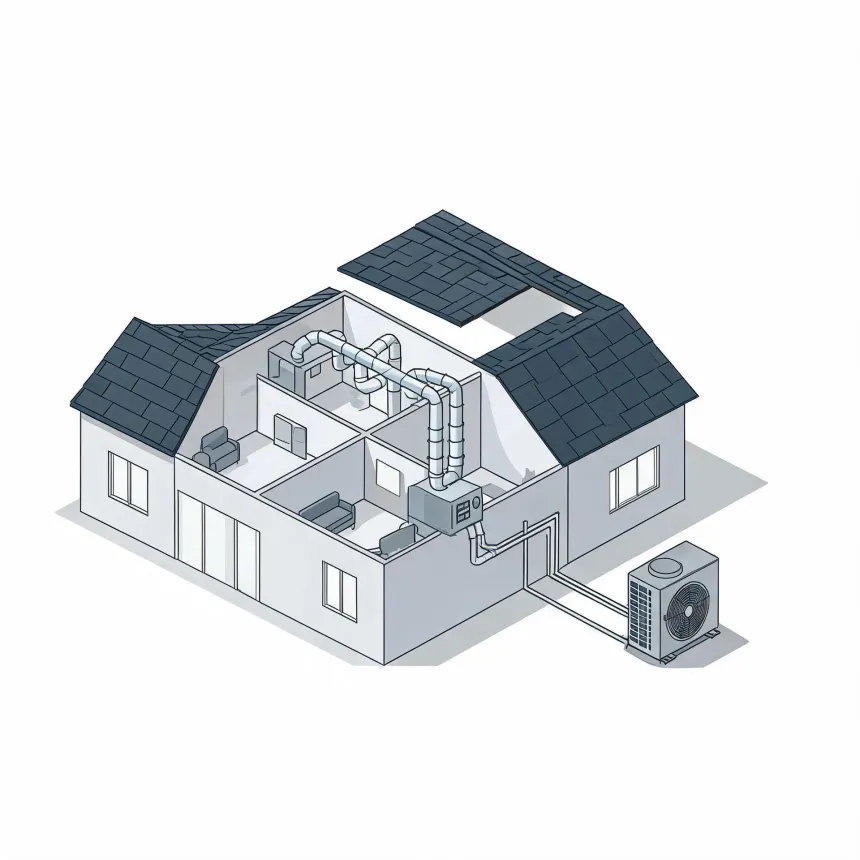
Isometric line illustration of a cutaway single-story house showing interior rooms, ceiling ductwork connected to an indoor air handler, and refrigerant lines running to an outdoor condenser unit on a pad.
Your system heats November through March and cools April through October.

NOAA nClimDiv, 1991–2020 normals

St. John the Baptist Parish saw 22 severe weather events between 2015 and 2024, including damaging wind and a handful of tornadoes.

A standard heat pump, correctly sized, holds up fine against that. No need to pay for anything beyond it.

Get it in before March, and heat pump season starts on your terms, not a scramble

Cooling runs April through October
Heat runs November through March
Climate zone 2A
Built for Laplace heatElectricity ran 11.73 cents per kilowatt-hour across Louisiana in 2024

Laplace falls in climate zone 2A, where cooling is the main load and the air stays humid most of the year. Any heat pump installed here new has to clear 14.3 SEER2 for cooling and 7.5 HSPF2 for heating, the federal minimum that took effect in 2023. That's a floor, not a ceiling. Some units on the market clear it by a wide margin, others barely make it, and both are legal to install. A federal tax credit is also available for equipment that meets efficiency requirements set by the Department of Energy. Ask a contractor which models on your list qualify before you decide.

Pick the heat pump that fits, not the one that chases a payback

At 11.73 cents a kilowatt-hour, a premium efficiency model takes longer to pay back here than in places with pricier power. Put the weight on getting the size and the install right instead. That is what decides how this system runs for you, not a higher SEER2 number on the sticker.

Find a contractor
A man in a dark cap, gray T-shirt and brown work pants walks up porch steps toward a dark front door, carrying a canvas tool bag filled with tools, with a potted shrub beside the entry.
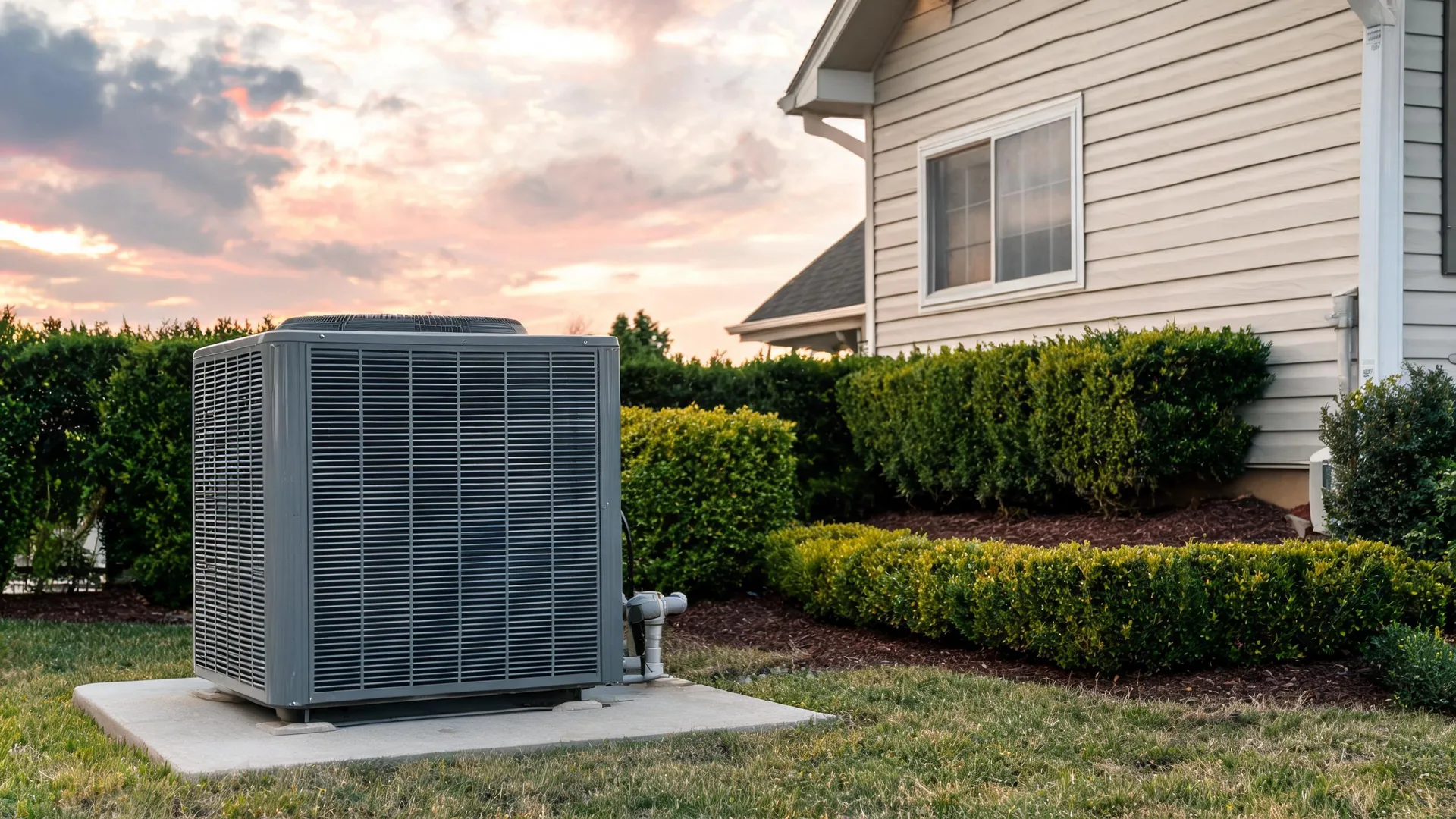
A gray heat pump condenser unit mounted on a concrete pad against the gray lap-siding exterior wall of a house.

The label tells you less than the run time does

The SEER2 and HSPF2 numbers on the label are lab ratings, not a promise of what you'll get. They're measured under set conditions, cooling in mild heat, defrost cycles on a schedule, nothing like a stretch of real weather where the unit runs hour after hour without a break. Run time is what tells you more about the machine than the label does. A heat pump that cycles on and off through the day is moving quickly between settings, and the compressor and reversing valve see more wear from that than from just running steady. One that holds a long, steady cycle wears less per hour of comfort delivered, even if its label number isn't the highest on the shelf. The rating matters for picking equipment. It doesn't tell you how the installation was done, and a right-sized unit installed well will outlast an oversized one with a better number on the box.

Sizing comes from a load calculation, not square footage

A contractor works out heat pump size from a room by room load calculation, the kind that accounts for window area, insulation, ceiling height and what direction a wall faces. Square footage alone leaves out too much to size a system off of. Homes that look alike on paper can need different equipment because one has more window glass or a different roof line.
Wrong size shows up in comfort, not just wear on the unit

An oversized heat pump cools or heats the air fast, then shuts off, so it never runs long enough to pull humidity out of the air or heat a room evenly. An undersized one runs constantly and still struggles to hold the temperature you set. Either way the fix isn't a bigger unit, it's the right one, matched to the load calculation instead of a guess.

Whatever's running now has to come out before the new equipment goes in, and what that involves depends on what's there. An old heat pump or straight AC coil gets disconnected, the refrigerant recovered, and the outdoor unit and line set pulled. If there's an old gas furnace in the mix, the contractor caps the gas line and removes the furnace along with it, since a heat pump replaces its job. The electrical whip and disconnect box for the old outdoor unit usually get reused or swapped depending on what the new unit needs, and the pad underneath it gets checked for level ground before the new unit sits on it. None of this is optional work tacked onto the job. It has to happen first, or the new equipment has nowhere to connect to.

Installation day starts with the walkthrough, confirming the load calculation still matches what's on site before anyone disconnects anything. Once the old equipment is out and the pad is set, the outdoor unit goes in first, then the line set gets run between outdoor and indoor sections. Those lines get brazed, not just connected with fittings, and then the whole system gets pulled down into a vacuum to pull out moisture and air before any refrigerant goes in. Skip that step and moisture sits in the lines, and that leads to corrosion and a shorter life for the compressor. After charging, the contractor checks refrigerant pressure against what the manufacturer specs for the outdoor temperature that day, not a fixed number, since the right charge shifts with conditions. Last comes airflow, checking that each room is getting what the duct system was designed to deliver, and that the thermostat is talking to the equipment the way it should.