





A row of single-story houses with porches behind a manicured lawn and trimmed hedges, framed by large oak trees draped with Spanish moss.

Heat Pump Installation in Lafayette, LA

Tell us about the job

Takes about a minute. No obligation.

New system or replacementHeat PumpLafayette Parish, LA
Step 1 of 2

What ZIP code is the job in?

The efficiency rating on a heat pump label tells you how much heat it moves for the power it draws, measured against the lowest rating still allowed on the market. A higher rated unit pulls more heat out of the outdoor air for the electricity it uses, and that gap shows up most on the days the system runs longest. What the label can't tell you is how that rating holds up once the unit is installed. A duct with a leak, an attic that isn't sealed well, or a unit sized wrong for the space all cut into that number before it ever reaches your living room. Homes running the same rated heat pump can end up with different results depending on what the air passes through to get where it's going. Sizing the system to the house, not just picking a rating off a brochure, is what decides whether you keep that efficiency or lose it along the way.

5 months
November through March, your system heats
7 months
April through October, it cools
44°F
the average winter night it heats against
91°F
the average summer afternoon it cools against
Isometric line illustration of a cutaway house showing interior rooms with furniture, ceiling ductwork connected to an indoor air handler, and refrigerant lines running to an outdoor condenser unit on a pad.
Your system heats November through March and cools April through October.

NOAA nClimDiv, 1991–2020 normals

Electricity heats 77.4% of the homes in Lafayette Parish.

A heat pump replacing an electric furnace or electric coils fits wiring that is already there.

Put a heat pump in before March or October box you in

Cooling runs April through October
Heat runs November through March
Power costs 11.73 cents a kWh statewide

Lafayette Parish sits in climate zone 2A, a hot and humid zone where cooling runs most of the year. Any split-system heat pump installed here now has to hit at least 14.3 SEER2 for cooling and 7.5 HSPF2 for heating, the federal minimum for units built since January 2023. That cooling number is higher than what the same unit would need to meet in much of the rest of the country, because the Southeast carries its own, stricter requirement. A unit that just clears the national floor elsewhere won't necessarily clear it here. Whatever gets installed has to be rated to meet this region's number, not just the one printed on a national spec sheet.

Pick the heat pump that will keep running, not just the one with the highest rating

Electricity in Lafayette runs about 11.73 cents a kilowatt-hour, cheaper than most of the country. That changes the math on a high efficiency unit. The extra you'd spend chasing a higher SEER2 number takes longer to earn back here than it would somewhere with pricier power. Reliability and the right fit for your home are worth more than squeezing out another point of efficiency.

Find a contractor
A gray heat pump outdoor unit mounted on a concrete pad next to the stone-accented exterior wall of a house.

The old equipment doesn't stay behind

Whatever is running now doesn't get reused once a heat pump goes in. A gas furnace paired with old AC gets disconnected and removed, ductwork gets tied into the new air handler, and the refrigerant lines get replaced rather than reused, since old line sets are sized and cleaned for the equipment that used them. If the old system had a failing compressor or a refrigerant leak, that line set may carry contamination you don't want feeding into a new unit. The electrical side usually needs a look too. Heat pumps draw power differently than a gas furnace did, especially with the backup heat strips many of them carry, so the breaker and disconnect get checked against what the new system actually needs rather than what the old one used.

Ask what the unit sounds like at full output

Every heat pump has a sound rating, and outdoor units vary a lot on this. Some run quiet enough to sit under a bedroom window, others get loud when the compressor ramps up on the hottest or coldest days. Ask the contractor to compare the sound rating between the models they're quoting, not just the efficiency numbers.
Ask how they're sizing it, not just what size they're proposing

A contractor should walk through the house, check the windows, the insulation, the duct layout, and run a load calculation before naming a size. If someone quotes a tonnage before seeing the house, or just matches what's being removed, that's a guess, not a sizing. A unit sized wrong runs longer than it should or cycles on and off too often, and either way it wears out faster.

A quote for the same size unit can still land differently depending on what else the job requires. A straightforward swap, where the old equipment matches the new in size and location, goes faster than one where ductwork has to be modified or extended to work with the new air handler. If the electrical panel doesn't have room for a new breaker, or the disconnect box near the outdoor unit isn't rated for what the heat pump draws, that work gets added in. Where the outdoor unit sits matters too. A pad that needs leveling, a long refrigerant line run, or tight clearance against a wall all add steps a simple side-by-side replacement wouldn't need. None of this shows up on a spec sheet. It shows up when someone actually walks the property and traces the lines from where the old equipment sat to where the new unit needs to go.

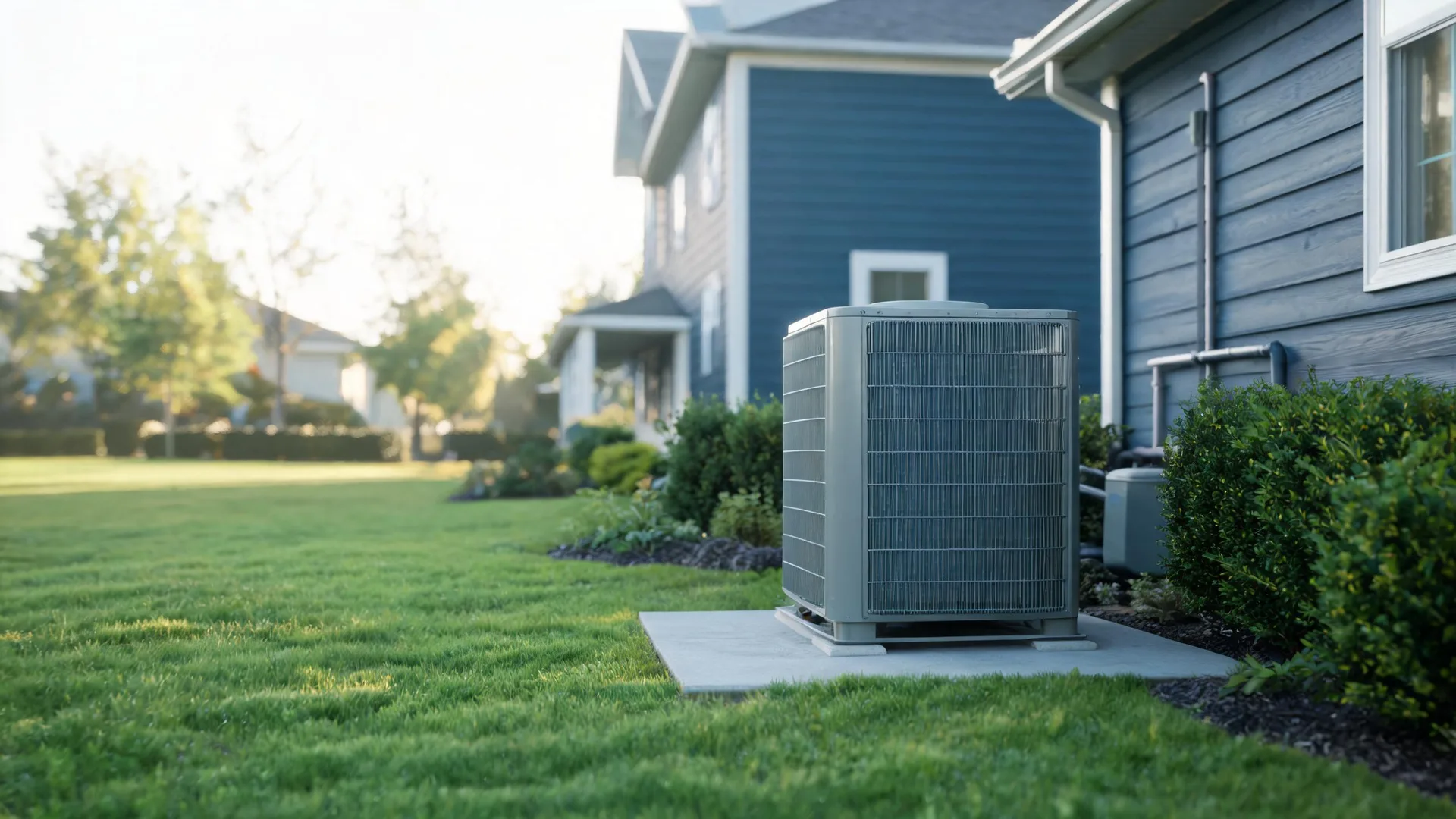
Install day starts outside, not in. The outdoor unit gets set first, on a pad that's level and clear of the wall and gutter line, because a unit crammed too close to the house won't pull air right. Inside, the air handler or coil gets tied into the existing ductwork, and that connection is where a lot of the day's time goes if the new equipment doesn't line up exactly with what was there before. Refrigerant lines get run and then pressure tested before anything gets charged, since a line set that leaks even a little will starve the system later. Once everything's connected, the system gets charged to the manufacturer's spec and run through its paces, cooling and heating both, before anyone calls it done. A contractor should walk you through the thermostat and anything new about how the system behaves, since a heat pump cycles differently than what it replaced.