




A low-angle view along a red brick wall with shrubs at its base, facing a mown grass lawn with a single-story light-colored house and pine trees under an overcast sky.

Heat Pump Installation in Jennings, LA

Tell us about the job

Takes about a minute. No obligation.

New system or replacementHeat PumpJefferson Davis Parish, LA
Step 1 of 2

What ZIP code is the job in?

Most homes in Jefferson Davis Parish run on electric heat already, close to seven in ten. A heat pump fits right into that setup, since it runs on the same electric circuit your current system likely uses. Gas heats about a quarter of homes here, and those homeowners have a different question to answer about whether to keep the gas furnace for backup or switch over entirely. If your home is already electric, installation is usually a more straightforward swap, matching up the new unit with the ductwork and electrical you have.

5 months
November through March, your system heats
7 months
April through October, it cools
44°F
the average winter night it heats against
91°F
the average summer afternoon it cools against
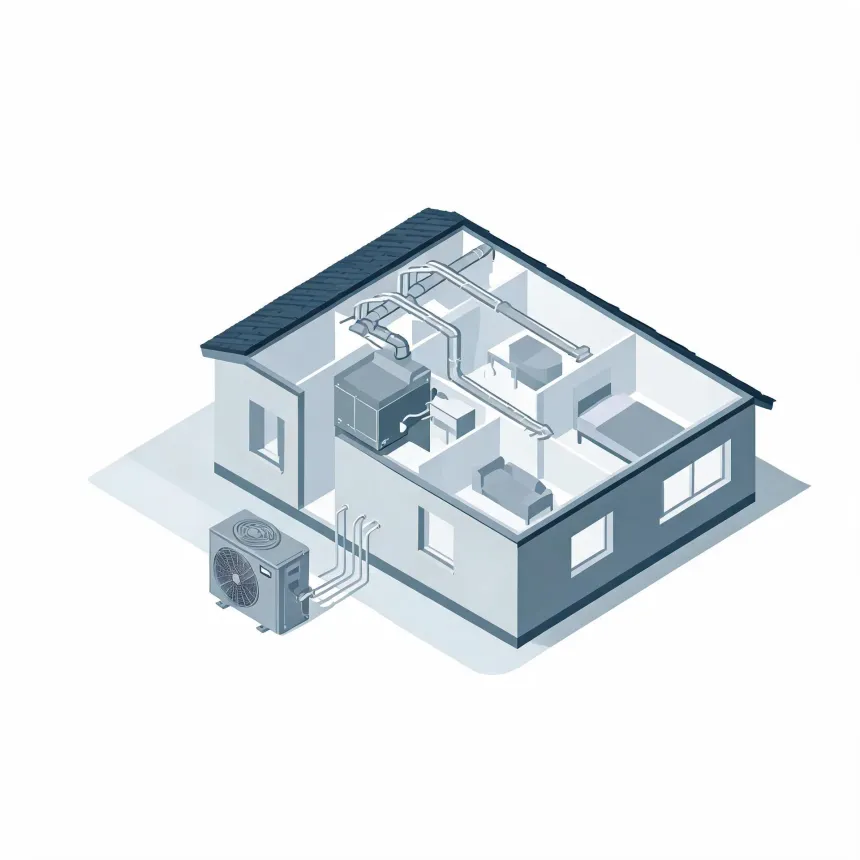
Isometric cutaway illustration of a single-story house showing interior rooms with ductwork, an indoor air handler unit, and an outdoor condenser unit connected by lines along the exterior wall.
Your system heats November through March and cools April through October.

NOAA nClimDiv, 1991–2020 normals

Electricity in Louisiana runs about 11.73 cents a kilowatt-hour, cheaper than most states.

A high-efficiency heat pump will cost less to run here, but with power this cheap, the payback on the pricier model stretches out, so picking one that holds up matters more than squeezing out another SEER2 point.

A standard heat pump sized right is all this climate asks for

Half the homes here were built by 1980
Power costs 11.73 cents a kWh statewide
Climate zone 2A
A standard heat pump sized right is all this climate asks forAsk about the warranty and the contractor's service record before you ask about the SEER2 number.

Jefferson Davis Parish sits in climate zone 2A, hot and humid, where cooling runs more of the year than heating does. Any split-system heat pump installed here has to meet 14.3 SEER2 for cooling and 7.5 HSPF2 for heating. That's a federal floor, not a local upgrade, so it's already built into any new unit a contractor would install. A federal tax credit is available on qualifying equipment, on top of whatever the efficiency buys back on the power bill.

Put the heat pump in before November, not after the first cold snap

Heat here runs November through March, cooling April through October. That only leaves a short stretch in between to swap out a system without doing it in a rush. Get the new heat pump in before November and it's running clean from the first cold morning, not the first emergency call.

Find a contractor
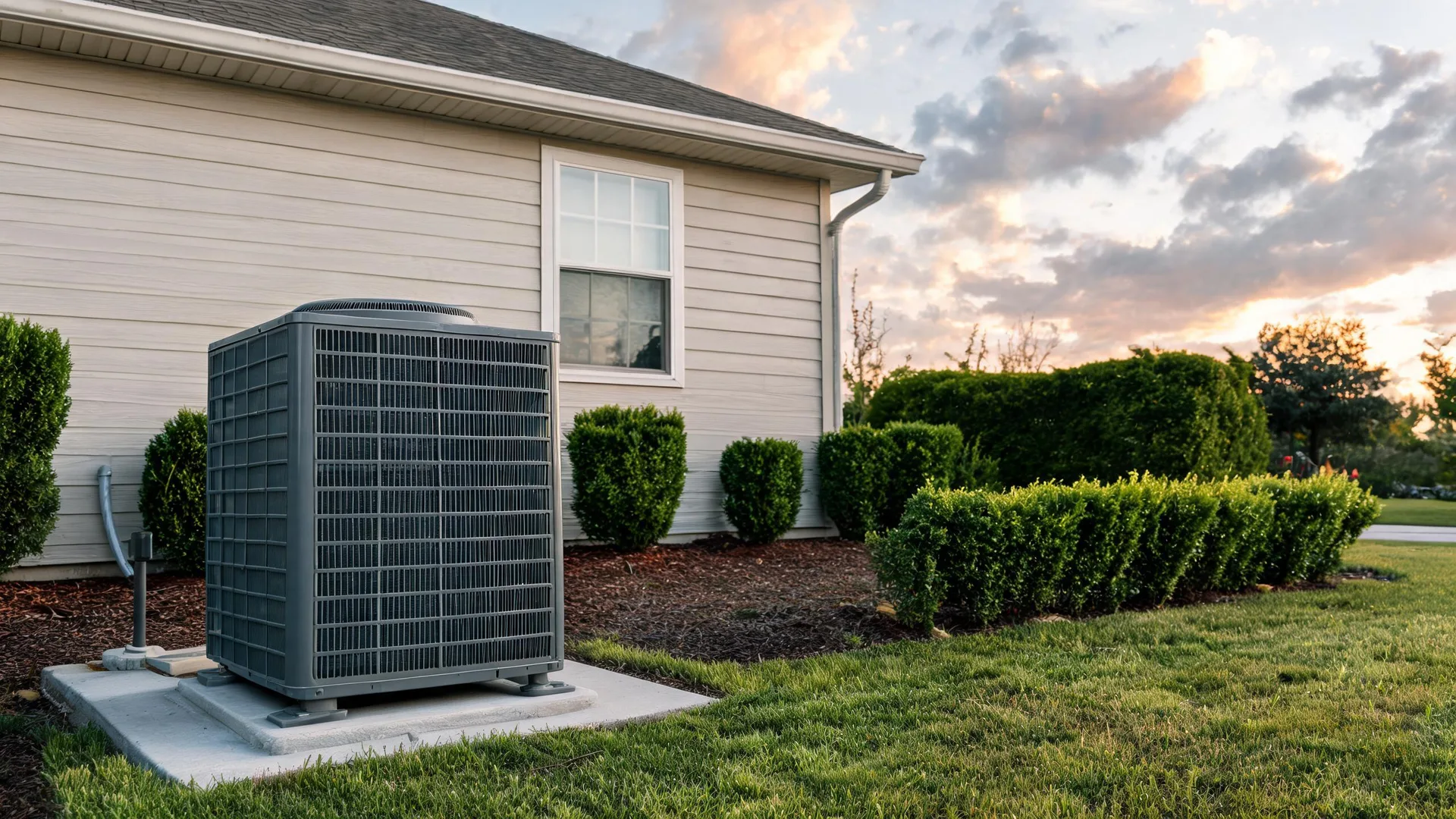
A gray heat pump outdoor unit mounted on a concrete pad next to a residential house with lap siding and stone accents.

Sized to the house, not just the square footage

Sizing a heat pump comes down to matching its output to the heat gain and heat loss of the house it's going into, not the square footage alone. A contractor works this out with a load calculation, room by room, weighing the windows, the insulation, the ceiling height, which way the house faces. Homes that look alike from the street can call for different sized units once those numbers are run. Oversize it and the unit short cycles, blasting the space to temperature and shutting off before it finishes pulling moisture out of the air, so the house feels cold and damp rather than comfortable. Undersize it and it runs flat out during the hardest stretches of summer and winter, struggling to keep up and wearing down faster for the effort. A unit sized right runs longer, steadier cycles, which is what keeps a house even and keeps the compressor from working harder than it has to.

Ask what happens below freezing

A heat pump loses capacity as the air outside gets colder, and leans on backup heat to make up the difference. Ask what kind of backup the system uses, how it's controlled, and at what temperature it kicks in. A unit that hands off to backup heat smoothly costs less to run than one that leans on it too soon or too often.
Ask what's in the install, not just the unit

Contractors can quote the same model and still hand over a different result. Ask whether the quote includes a load calculation, a check of the existing ductwork, and new line sets, or whether it's reusing what's there. A heat pump matched to the house still needs ducts that can move the air it's pushing, and a straight swap only works if the ductwork was sized right the first time.

The old system doesn't need to be running for the new one to go in, but it has to come out, and that's its own piece of work. A furnace or air handler gets disconnected from the ductwork, the electrical, and in a gas setup, the gas line, which has to be capped off safely. An outdoor condenser gets its refrigerant recovered before it's disconnected, never just cut loose, since venting refrigerant into the air is against the law. Old line sets usually come out rather than get reused, since they're sized for the old unit's charge and can carry contamination into the new one. Whatever's left gets hauled off and scrapped. None of this is the hard part of the job, but skipping steps in it is how a new heat pump ends up fighting the ghost of the old setup.

Install day starts with the load calculation and duct check already done, so the crew isn't figuring out the system on the fly. The indoor unit goes in first if it's being swapped, set on its stand or slid into the same footprint as the old one, then the line set gets run between indoor and outdoor units. The outdoor unit gets set on a pad, leveled, and connected to the line set and the electrical whip. Once both ends are connected, the line set gets pulled down to a vacuum to clear out any moisture and air before refrigerant goes in, since either one left in the lines will keep the system from running right. Only after that does the unit get charged, fired up, and checked against the manufacturer's numbers for pressure and temperature split. The last hour is usually spent on the thermostat, walking through the controls, and going over the backup heat settings before anyone signs off on the job.