






A red brick wall with a row of low shrubs and mulch bed on the left, a mown lawn in the center, and a single-story light-colored house with a gabled roof beyond, backed by pine trees under an overcast sky.

Heat Pump Installation in Denham Springs, LA

Tell us about the job

Takes about a minute. No obligation.

New system or replacementHeat PumpLivingston Parish, LA
Step 1 of 2

What ZIP code is the job in?

Ask what size unit they're proposing and how they got that number. A contractor should walk the house and check the windows, the insulation, the duct layout, not just match the old unit's size. Too big and it short cycles, turning on and off without really pulling moisture out of the air. Too small and it runs constantly and still can't keep up when it's coldest or hottest out. Ask about the backup heat too, since a heat pump leans on strip heat or another source when outdoor temperatures drop low enough, and you want to know what kicks in and when. Ask what happens to the existing ductwork, because a heat pump moves a different volume of air than what you may have now, and ducts that were fine before can end up undersized.

5 months
November through March, your system heats
7 months
April through October, it cools
42°F
the average winter night it heats against
91°F
the average summer afternoon it cools against
Isometric cutaway illustration of a single-story house showing interior ductwork, an indoor air handler, and an outdoor condenser unit connected by lines along the exterior wall.
Your system heats November through March and cools April through October.

NOAA nClimDiv, 1991–2020 normals

Electricity in Louisiana runs about 11.73 cents per kilowatt-hour, cheaper than most states.

A higher SEER2 model will cost more up front and take longer to earn that back here, so pick for reliability first.

Put a heat pump in before October, and November's cold snap is just another day it runs

Cooling runs April through October
Heat runs November through March
Power costs 11.73 cents a kWh statewide
Most homes here already run on electricity73% of homes in Livingston Parish heat with it, a heat pump just does that job better

Denham Springs is in climate zone 2A, where cooling carries most of the year's load. Any split-system heat pump installed here has to hit 14.3 SEER2 for cooling and 7.5 HSPF2 for heating, the federal minimum since January 2023. That applies whether the unit is small or large, there's no separate break for heat pumps the way there is for straight air conditioners. These numbers are a floor, not a target, so ask where the model you're quoted actually lands above it. A system priced right at the minimum can still qualify for the federal tax credit, since that credit is tied to the same efficiency thresholds.

This county sees storms. Decide now where the heat pump sits and how you'll stay warm when the power goes out.

Livingston Parish logged 89 severe weather events over the past ten years, from damaging wind to hail to tornadoes. Nearly half of Louisiana households lost power for a day or more last year. Ask the contractor where the outdoor unit will sit and what keeps the house warm when the grid doesn't.

Find a contractor
A man in a gray polo shirt and tan work pants carries a worn canvas tool bag up porch steps toward a closed gray front door, with a potted shrub beside the entry.
A gray heat pump outdoor unit mounted on a concrete pad next to the stone-accented exterior wall of a house.

The size on the nameplate should come from a calculation, not the old unit

A heat pump should be sized from a load calculation, not from whatever is already sitting on the pad outside. A contractor works out how much heat the house loses in the cold and gains in the heat by going through the square footage, the windows, the insulation, and the duct layout, then sizes the equipment to match. That number is specific to the house, not the old unit. Oversize it and the compressor short cycles, shutting off before it's run long enough to pull moisture out of the air, so the house can still feel damp at the right temperature. It also means more stops and starts over the unit's life, and that cycling wears on the compressor more than steady running does. Undersize it and the unit runs constantly on the coldest and hottest days and still can't keep up, leaning on backup heat more than it should. Sized right, the system runs in long, steady stretches and holds the temperature evenly instead of swinging around it.

The old equipment still has refrigerant in it

A straight air conditioner or an old heat pump has refrigerant sealed inside the lines, and that refrigerant has to be recovered before anything gets disconnected. A licensed contractor pulls it out with a recovery machine rather than letting it vent into the air. This is a legal requirement, not a courtesy, so it should happen no matter who does the removal.
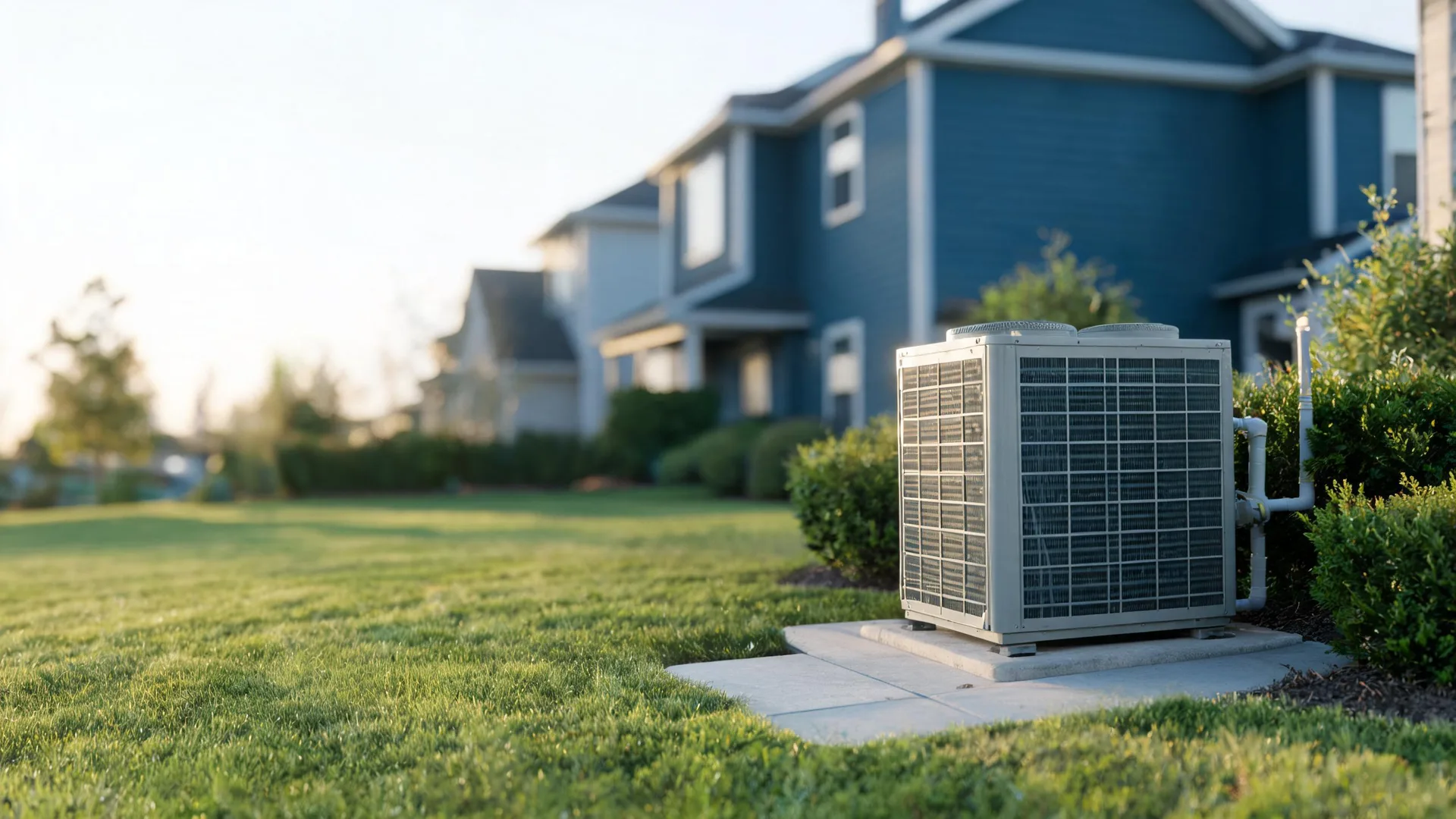
The furnace underneath might be staying or going

If the old system is a straight air conditioner paired with a gas furnace, ask what happens to that furnace. Some installs swap in a heat pump and keep the furnace as backup heat for the coldest days. Others pull the furnace too and go all-electric with strip heat instead. That decision changes what gets hauled out and what gets left in place, so it's worth asking before the crew shows up, not after.

What drives the cost here is precision, not just equipment. The outdoor unit and the indoor coil have to be matched to each other, and the refrigerant line between them gets charged to an exact weight, not eyeballed. That means brazing the joints clean, pulling a vacuum to clear out moisture and air, then weighing in refrigerant to the manufacturer's spec. Skip or rush any of that and the system still turns on, it just runs below the efficiency it was rated for, and the compressor pays for that every year it runs. Ductwork adds to the labor too. Runs that were fine for the old equipment sometimes need to be resized or replaced to move the air a heat pump puts out. Where the outdoor unit sits, how far the line set has to run, what the electrical panel can support, all of that is specific to the house, which is why a real walk-through has to happen before anyone gives you a number.

The old equipment comes out first, and the refrigerant in it gets recovered before any line gets cut. The outdoor pad gets checked too, and releveled or replaced if it's cracked or sinking, since the new unit has to sit flat to drain right. Setting the outdoor unit and indoor coil in place is the easy part. Most of the day goes into the line set between them. That means brazing the joints clean, pulling a vacuum to clear out moisture and air, then weighing in refrigerant to spec rather than guessing at it. Electrical work often comes next, since a heat pump may call for a different breaker or disconnect than what was there before. Near the end, airflow gets checked at the vents, the thermostat gets set, and someone should walk you through the controls, including how backup heat kicks in on the coldest days. A gas smell, a breaker that won't hold, or weak airflow at a vent are things to point out before the crew packs up, not after.