






Two illuminated white colonial-style houses with wrap-around porches, flanked by oak trees draped in Spanish moss, photographed at night.

Heat Pump Installation in Bossier City, LA

Tell us about the job

Takes about a minute. No obligation.

New system or replacementHeat PumpBossier Parish, LA
Step 1 of 2

What ZIP code is the job in?

A heat pump installed in Bossier City has to meet 14.3 SEER2 for cooling and 7.5 HSPF2 for heating. That's the federal minimum for this zone. Central air systems in the Southeast have to clear an even higher cooling bar than most of the country, since summers here run long and humid. A heat pump works as both, so the same cooling-side rule applies to it. A federal tax credit is available on qualifying equipment, worth checking against whatever system you're considering.

5 months
November through March, your system heats
5 months
May through September, it cools
38°F
the average winter night it heats against
92°F
the average summer afternoon it cools against
Isometric cutaway illustration of a single-story house showing interior rooms with ductwork, an indoor air handler unit, and an outdoor condenser unit connected by lines along the exterior wall.
Your system heats November through March and cools May through September.

NOAA nClimDiv, 1991–2020 normals

Electricity already heats 56.2% of homes in Bossier Parish.

A heat pump running on electricity fits what this place already runs on.

At 11.73 cents a kWh, payback matters less than getting through the outage

Power costs 11.73 cents a kWh statewide
70 hail events from 2015 to 2024
Climate zone 3A

Cooling starts in May here, and heat starts in November. If the system you have now is near the end, April or October is the month to replace it, before either season puts a load on it. A heat pump installed ahead of season gives the crew time to size it to the house and run it before it has to do anything. Wait until the first hot or cold week and you're calling after the system has already failed, on the same week every other homeowner with an old unit is calling too.

Meet the standard here

A new system here has to meet this region's minimum efficiency, which limits what can go in.

Find a contractor
A man in a dark long-sleeve shirt and worn brown work pants, seen from behind, carries a canvas tool bag up the steps toward a gray front door, with a potted shrub beside the entry.
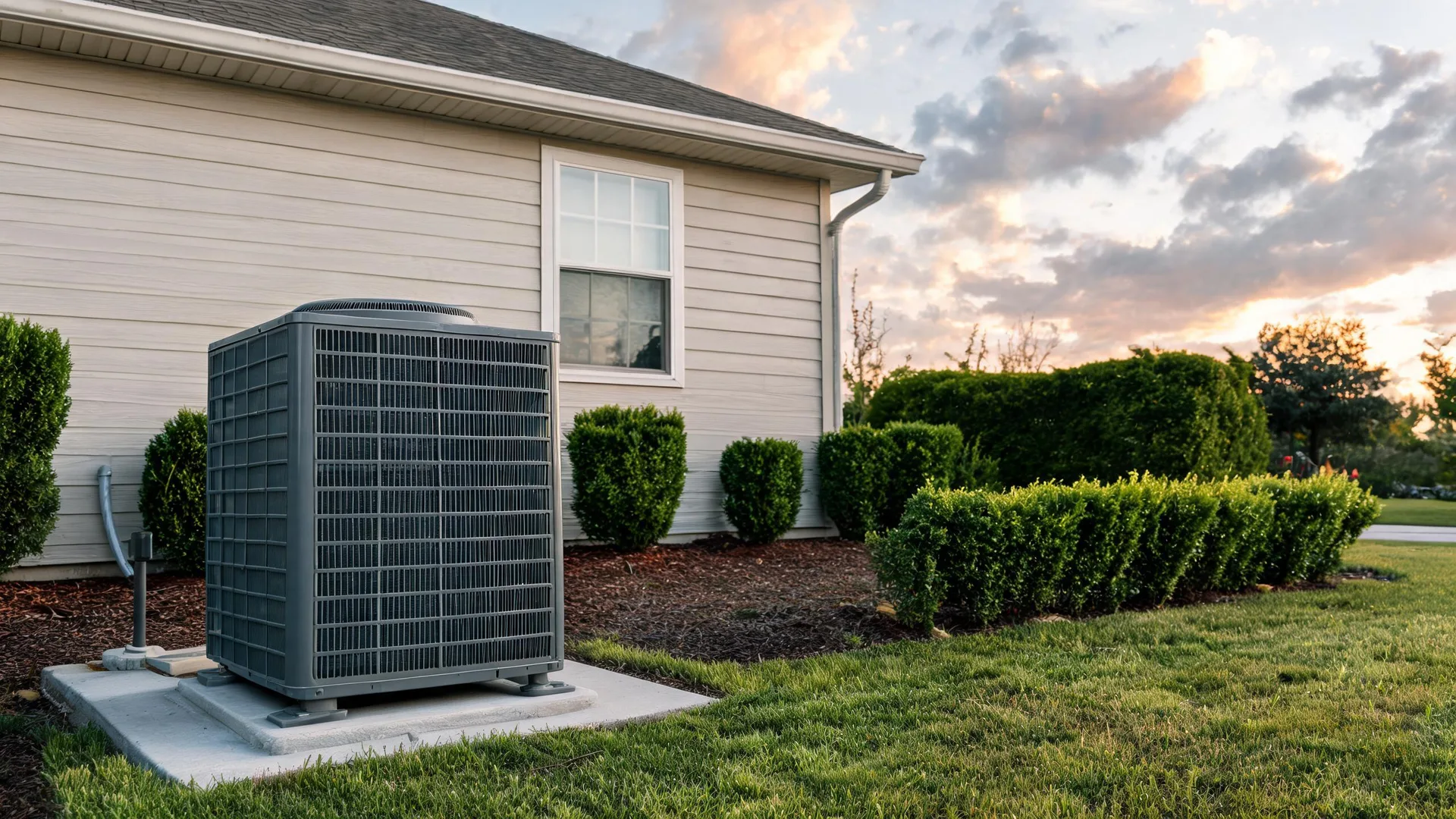
A gray heat pump outdoor unit mounted on a concrete pad next to a residential house with lap siding and stone accents.

This unit doesn't get an off season

A heat pump here runs cooling through the summer, then switches over and runs heat through the winter. The outdoor unit sits outside year round, through all of it. Bossier Parish logged 70 hail events between 2015 and 2024, and that's the cabinet and coil taking the hit each time. Long run hours wear parts down. Hail adds a second kind of wear on top of that, one the equipment can't avoid by sitting idle. A system sized and installed for this place has to hold up to both.

Ask what happens below freezing

A heat pump loses capacity as the outdoor temperature drops, and past a certain point it needs backup heat to keep the house warm. Ask what that backup is, how it switches on, and what triggers it. Systems that look the same on paper can handle a cold snap very differently depending on how that backup stage is controlled.
Ask who sized it and how

The right size comes from a load calculation on the house itself, room by room, not from matching whatever is being replaced. A unit sized too big will short cycle and struggle to pull humidity out of the air. A unit sized too small will run constantly and still fall behind on the hottest or coldest days. Ask to see the calculation, not just the number it landed on.

Sizing a heat pump comes down to how much heat the house gains in summer and loses in winter, room by room, not the square footage on a listing. That load calculation looks at the windows, the walls, the ceiling, which way rooms face, and how much shade the house gets, since houses that look alike from the street can need very different amounts of heating and cooling. Get it wrong in either direction and the house pays for it. Oversize the unit and it blasts the house to temperature fast, shuts off, then kicks back on a few minutes later, cycling all day without ever running long enough to pull moisture out of the air, so the house feels cool but damp. Undersize it and the unit runs nonstop on the hardest days of summer and winter and still falls behind. The ductwork matters just as much as the unit itself. A heat pump sized right for the house but pushed through ducts that are too small or too leaky won't deliver the air it's rated for, so sizing the equipment means checking what the duct run can actually carry.

Installation starts with the old equipment coming out, not the new one going in. The line set gets disconnected, the old refrigerant recovered, and the existing pad or mounting checked to see if it can take the new unit or needs to be redone. Indoor and outdoor units usually go in on the same visit. The outdoor unit gets set and leveled, the indoor coil or air handler connected, and new line set run if the old one doesn't match what the new system needs. Once both ends are in place, the system gets charged with refrigerant to the manufacturer's spec and checked for leaks before anything is powered on. Electrical work often follows, since a heat pump can call for a different breaker or disconnect than what was there before. The last part of the day is startup and testing. The crew runs the system in both heating and cooling, checks airflow at the vents, and confirms the thermostat is talking to the unit correctly.