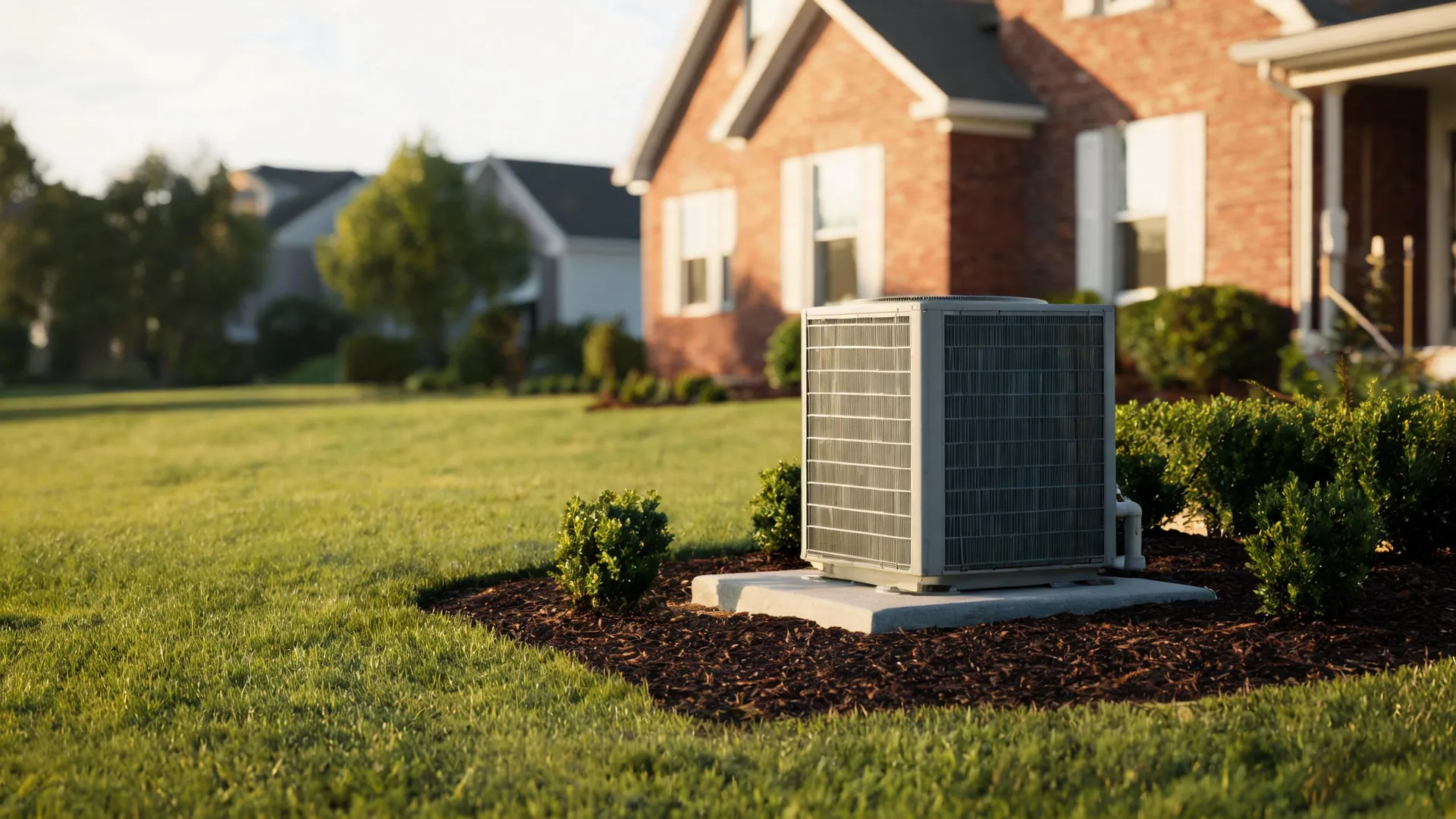
A grey residential air-conditioning condenser unit mounted on a concrete pad beside a house, photographed at sunset.

Heat Pump Installation in Baton Rouge, LA

Tell us about the job

Takes about a minute. No obligation.

New system or replacementHeat PumpEast Baton Rouge Parish, LA
Step 1 of 2

What ZIP code is the job in?

The old equipment comes out

A heat pump installation means pulling the old condenser, the air handler or furnace, and the line set, then disposing of the refrigerant the right way. If the ductwork stays, it gets checked for leaks and connected to the new coil. The old pad, disconnect box and wiring often need to be swapped too, since a new system rarely matches the old hookups exactly.


Removal is part of the job, not an extra step

Taking out the old system has to happen before the new one goes in, so it's built into the install rather than something separate. The main thing worth asking a contractor is whether the refrigerant in the old unit gets recovered properly, since venting it is not legal and a reputable shop will not do it.

5 months
November through March, your system heats
7 months
April through October, it cools
42°F
the average winter night it heats against
91°F
the average summer afternoon it cools against
Isometric cutaway illustration of a single-story house showing interior ductwork, an indoor air handler and furnace unit, and an outdoor condenser connected by a line, on a white background.
Your system heats November through March and cools April through October.

NOAA nClimDiv, 1991–2020 normals

Electricity in Louisiana ran 11.73 cents per kilowatt-hour in 2024, lower than most states pay.

A Baton Rouge install is worth picking for how it holds up through a power outage, not for shaving a few dollars off the power bill.

Most homes here already run on electricity, so a heat pump fits what's already in place

64.7% of homes heat with electricity
Power costs 11.73 cents a kWh statewide
Climate zone 2A
Get it in before AprilCooling runs April through October here. March is the month to have it done.

Baton Rouge is in climate zone 2A, a hot, humid zone where cooling runs more of the year than heating does. Any split-system heat pump installed here has to meet 14.3 SEER2 for cooling and 7.5 HSPF2 for heating. That's higher than the national minimum, since the Southeast sets its own floor for central air capacity. A unit that doesn't meet it can't legally go in. A qualifying heat pump can also make the home eligible for a federal tax credit, worth asking about before the install, not after.

Reliability first

Power is cheaper here, so the most efficient model takes longer to pay off. Reliability and fit matter more.

Find a contractor
A man in a dark long-sleeve shirt and tan work pants carries a waxed canvas tool bag up concrete steps toward a blue front door of a gray-sided house, with potted shrubs nearby.
A gray heat pump outdoor unit mounted on a concrete pad next to the stone-accented exterior wall of a house.

Sized wrong, it fights the house all day

A heat pump that's too big cools the room fast and shuts off before it pulls the moisture out of the air. The space feels cool and damp at the same time, and it cycles on and off all day instead of running long, steady stretches. One that's too small just can't keep up when the temperature swings hard, and it runs nonstop trying to close a gap it was never built to close. Either way, the extra starts and stops wear on the compressor faster than steady running would. Sizing it right means a contractor works out the heat gain and heat loss for the house itself, room by room, counting the windows, the insulation, the duct runs, not just the square footage. That calculation is what decides the size of the unit, not a guess based on the last one.

The equipment is only part of what's priced

A heat pump installation prices the condenser and air handler together, plus the line set that connects them, the new disconnect box, the pad, and wiring to match the new hookups. Ductwork that needs sealing or resizing to fit the new coil adds to that. Homes getting the same model installed can end up with different totals because of what the ductwork and electrical already there need, not because the equipment itself costs more.

Access drives labor more than the equipment does

Where the condenser and air handler sit, how far apart they are, and how easy the attic or crawlspace is to work in all change how long the install takes. A straight swap in an open space goes faster than one where the line set has to run further or the old equipment is wedged somewhere tight. The harder the access, the more hours it takes to get the same system in and running.

Ask what the warranty covers, not just how long it runs. Parts and labor are not the same thing, and a warranty that only covers parts still leaves a bill for the work to put them in. Ask how loud the outdoor unit runs at full output, since that matters more if it sits near a window or a patio than it does on paper. Ask what refrigerant it uses, since older refrigerants are being phased out and that affects whether parts are easy to find later on. Ask whether the compressor runs at a single speed or ramps up and down, because that's what decides whether the system cycles on and off or runs long, steady stretches. And ask what happens on the coldest days, since every heat pump loses capacity as the temperature drops, and the real question is what backup heat kicks in and how the system decides to use it.

Install day starts with removal and prep, so most of the morning goes before any new equipment gets set. The condenser lands outside first. Then the line set gets run to the air handler, brazed, and pressure tested before anyone opens a valve. That pressure test matters more than it looks like it does. A leak found now is a quick fix. A leak found after everything is sealed up means pulling it apart again. Once the lines hold pressure, the system gets evacuated to pull out moisture and air, then charged to the weight the manufacturer specs, not just until it feels cold. Last comes the startup check, airflow across the coil, static pressure in the ducts, the temperature split between the air going in and the air coming out. A contractor walking through those numbers before packing up is a good sign the job was done right, not just finished.