




A row of single-story houses, the nearest of red brick with a covered porch and others with light siding, set behind a mowed lawn and a tall trimmed hedge, with large oak trees draped in Spanish moss overhead.

Heat Pump Installation in Alexandria, LA

Tell us about the job

Takes about a minute. No obligation.

New system or replacementHeat PumpRapides Parish, LA
Step 1 of 2

What ZIP code is the job in?

Alexandria sits in climate zone 2A, a hot and humid zone where cooling carries most of the year's load. Any heat pump installed here has to meet the Southeast's regional rule, not just the national minimum. For a split system under 45,000 Btu/h, that means 14.3 SEER2 for cooling, with 7.5 HSPF2 on the heating side. That cooling number is higher than what manufacturers have to meet everywhere else in the country, since this region carries its own standard. A unit that qualifies will carry that rating on its nameplate, and a contractor sizing your system has to work within it.

5 months
November through March, your system heats
7 months
April through October, it cools
41°F
the average winter night it heats against
92°F
the average summer afternoon it cools against
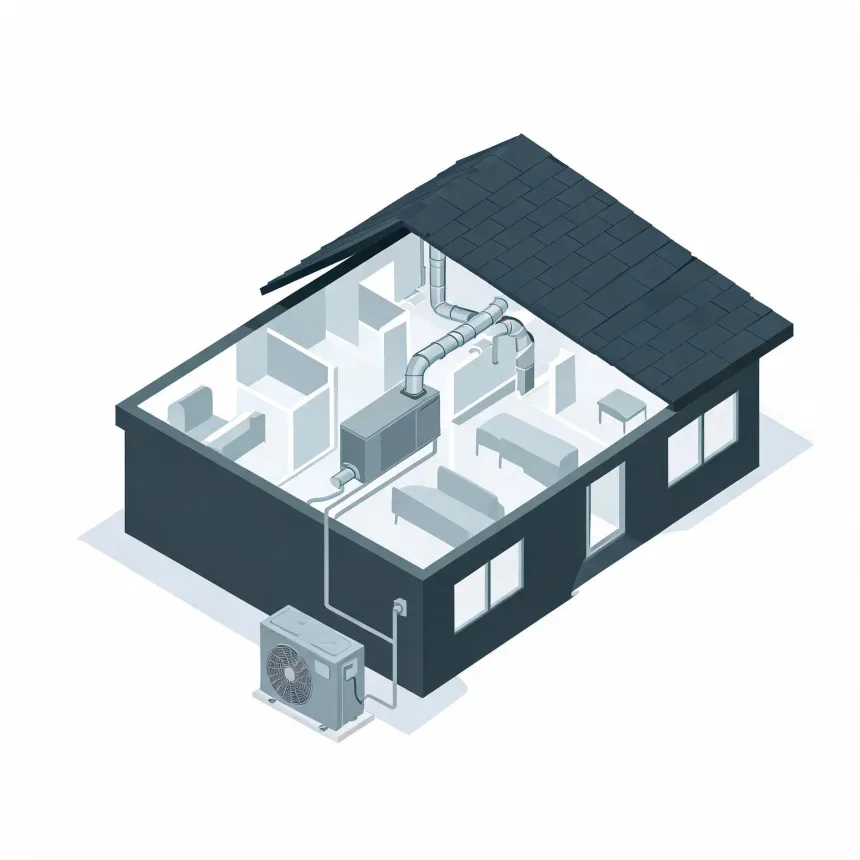
Isometric cutaway illustration of a single-story house showing interior rooms, ceiling ductwork connected to an air handler, and an outdoor condenser unit linked by a line set.
Your system heats November through March and cools April through October.

NOAA nClimDiv, 1991–2020 normals

Half the homes in Rapides Parish were built in 1980 or earlier, half later.

A heat pump sized to the house works the same in either one, as long as sizing goes by the house itself and not its age.

Put a heat pump in before October and it has all of November to prove itself before heat season starts.

Cooling runs April through October
Heat runs November through March
Power costs 11.73 cents a kWh statewide

Most homes in Rapides Parish heat with electricity, 70.0% by the latest count. Utility gas covers another 26.1%, with bottled or LP gas making up a small remainder. That electric majority matters for a heat pump. It runs on the same fuel most of these homes already have wired in. Swapping a straight electric furnace or an old heat pump for a new one doesn't mean adding a gas line or rethinking how the house is fed. If your home already heats with electricity, a heat pump replacement is usually the simplest path, since the house is already set up for it.

Power is cheap here. Fit matters more than efficiency.

At 11.73 cents a kilowatt-hour, electricity here costs less than it does in most of the country. That changes what's worth paying for. A heat pump with a higher SEER2 number costs more upfront, and the savings on the power bill take longer to earn that back. What matters more is picking a system sized and built for this place, one that holds up through the outages and heat this area sees. Get a contractor out to look at your home and work out what fits.

Find a contractor
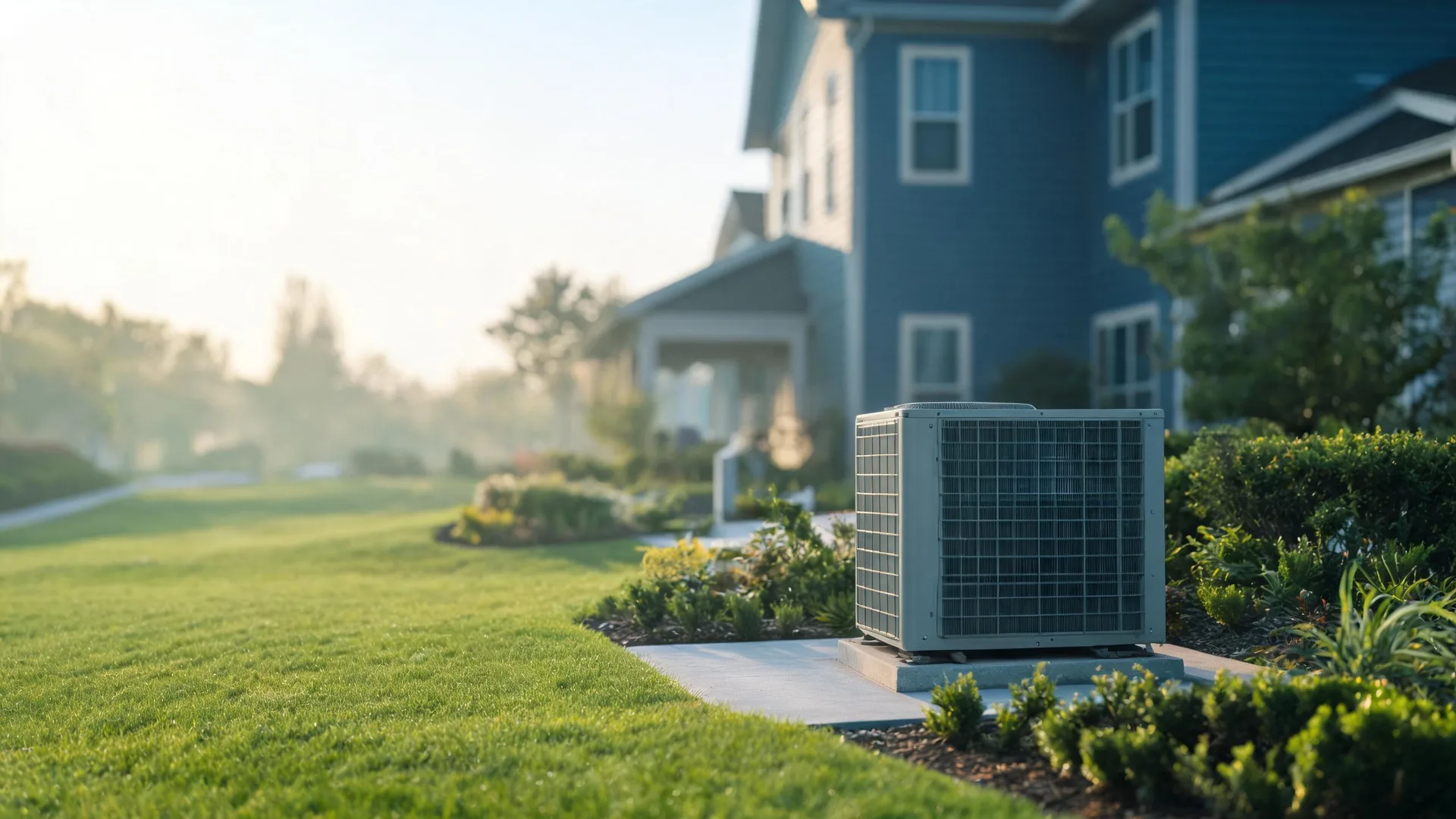
A residential heat pump outdoor unit mounted on a concrete pad next to a house with gray vinyl siding.

What actually happens on install day

Installation day doesn't start with the new unit, it starts with pulling the old one out. The refrigerant gets recovered first, since it can't just be vented. Then the old outdoor unit, indoor coil and line set come out, and the condition of what's underneath usually decides how the rest of the day goes. A line set that's clean gets reused if it's the right size for the new system. One that's worn, kinked or the wrong diameter gets replaced, which means brazing new connections and pulling a vacuum on the whole system before any refrigerant goes back in. That vacuum step matters more than people think, since any moisture or air left in the lines will shorten the compressor's life fast. Once the new outdoor unit is set and the indoor coil is in, the electrical gets tied in, the system gets charged to the manufacturer's spec, and then it runs through its paces in both directions, cooling and heating, before anyone calls it done. A thermostat changeover and a check of airflow at the registers usually close it out.

Ask what the warranty covers and for how long

Compressors and coils usually carry separate warranty terms, and labor is often not included at all even when the part is. Ask what's covered, for how long, and whether labor is part of it or billed separately if something fails. A contractor who installs the unit should be able to say this without looking it up.
Ask how the ductwork was checked, not just the unit

A heat pump moves more air across more of the year than a furnace that only runs part of it, since the same ducts carry both heating and cooling. If the ducts are leaky or undersized for the new system, the equipment can be sized right and still fall short in the rooms farthest from it. Ask whether the ducts were inspected as part of the quote, not added on after something turns up wrong.

Sizing a heat pump isn't the same as sizing a window unit. Too big, and it cools the room fast but shuts off before it ever pulls the moisture out of the air, so the house feels clammy even at the right temperature. Too small, and it runs flat out on the hottest and coldest days without ever catching up. Either mistake also shortens the compressor's life, since short cycling and nonstop running both add wear that steady, well-matched runtimes avoid. The right size comes from a room by room look at the house, how much glass it has, which way it faces, how the attic and walls hold heat. Square footage alone skips all of that, which is why houses that look alike from the street can still need different systems.

A lot of what sets the price isn't the equipment, it's what it takes to get the lines and wiring to it. A heat pump needs a line set run between the outdoor unit and the indoor coil, and if the old lines are the wrong size or worn through, those get replaced rather than reused. The outdoor unit also needs its own electrical circuit, and if the panel is already full or the breaker doesn't match what the new unit calls for, that's its own piece of work. Where the outdoor unit sits matters too. A pad that needs leveling, or a spot that's hard to reach, adds time that a straightforward swap wouldn't. Ductwork is the other side of it. If the existing ducts were sized for a different kind of system, or a return is undersized, a contractor may need to modify them for the new unit to perform the way it's rated to. None of this shows up on the nameplate, but it's most of what separates one installation from another.