A row of single-story houses, one of red brick and others with pale siding, behind a mowed lawn and a tall trimmed hedge, framed by large oak branches draped with Spanish moss.

Heat Pump Maintenance in Lafayette, LA

Tell us about the job

Takes about a minute. No obligation.

Tune-up, service, or cleaningHeat PumpLafayette Parish, LA
Step 1 of 2

What ZIP code is the job in?

Half the homes in Lafayette Parish were built in 1988 or later, so a lot of heat pumps here are still within a reasonable working life. That's worth protecting with a yearly check. The coil needs to stay clean, the refrigerant charge needs to be correct, and the electrical connections need to be tight, and that holds whether the system went in last year or further back. Skip it for a while and small issues like a weak capacitor or a drifting charge sit there wearing on the system until something fails. If your heat pump came with the house, a yearly visit is what keeps it running the way it did on day one.

Your heat pump switches over to cooling in April and starts earning its keep right away.

Get it checked in March, before the first hot stretch asks something of it.

Severe weather finds the outdoor unit first

68 severe weather events from 2015 to 2024
49% of homes statewide lost power a day or more in 2024
39 damaging wind events from 2015 to 2024

A yearly check matters most while the system still has a lot of working life ahead of it. Catch a weak capacitor or a connection running hot early, before it takes anything else with it. A system past its first few years can pick up small issues that compound, bearing wear, a connection that's loosened, a charge that's drifted down. Fixed early, each of those is a small job. Left alone, they add up to a compressor replacement instead of a part. The same visit protects a system installed last year and one that came with an older house, but the newer one has more years ahead to protect.

Keep it in good shape

If your system is fairly new, a yearly check keeps it in good shape for longer.

Find a contractor
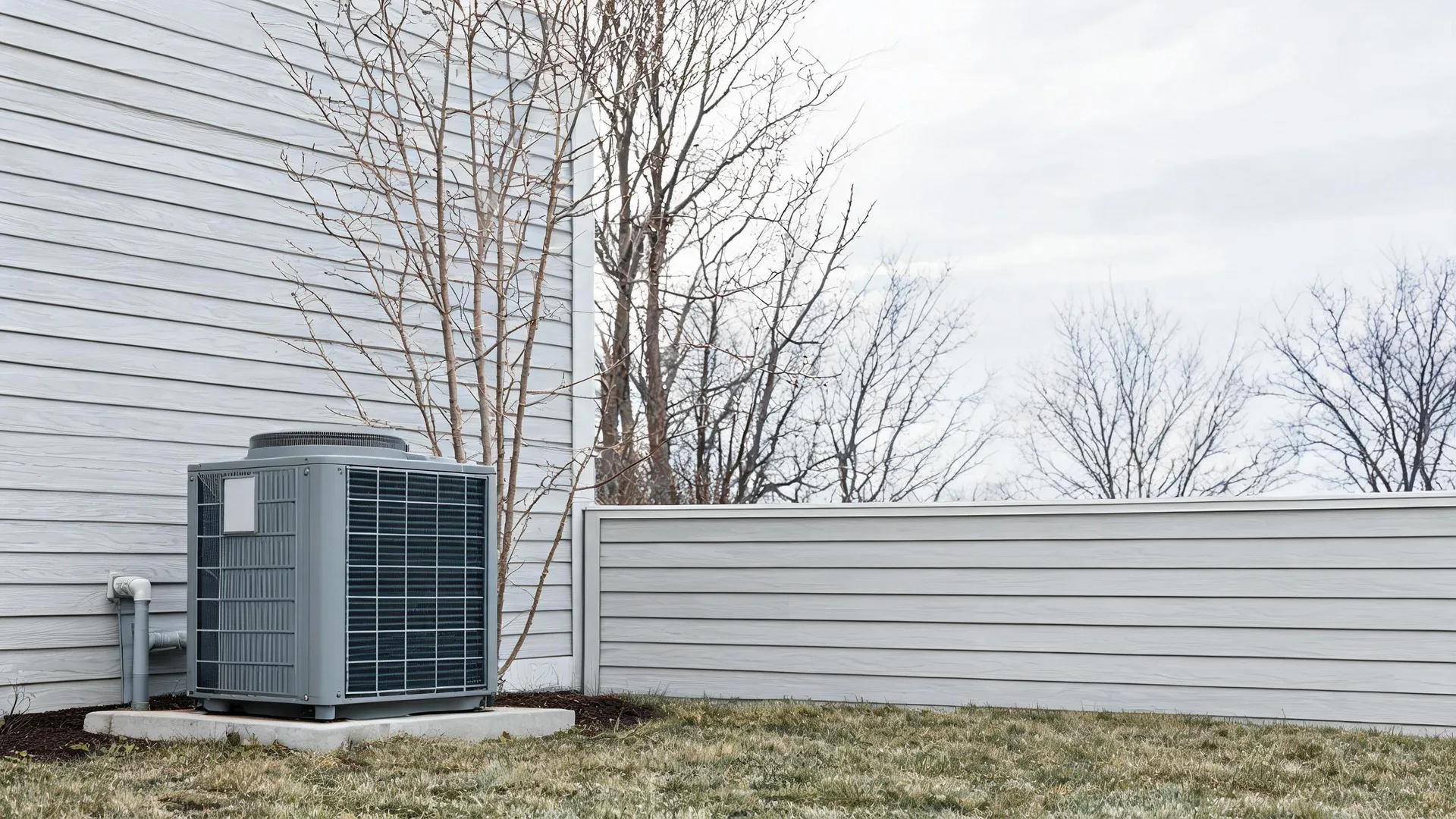
A gray air-source heat pump mounted on a concrete pad next to a house with gray vinyl siding, surrounded by gravel and flanked by green shrubs and white hydrangea flowers.

What to do between visits, and what to leave alone

Keep the area around the outdoor unit clear. Leaves, pine straw, and grass clippings block airflow through the coil, and the unit works harder to move the same amount of heat. A couple feet of open space on all sides is enough.

Change the air filter on a regular schedule. A clogged filter starves the system of airflow, and a heat pump moving less air has to run longer to do the same job. Check it monthly and hold it up to the light. If you can't see through it, swap it.

Watch the outdoor unit after a hard freeze or an ice storm. A heat pump defrosts itself automatically, so some frost is normal. A thick layer of ice that doesn't clear on its own, or a unit that's frozen solid, means something's not cycling the way it should.

Inside, keep vents and returns open and unblocked by furniture or rugs. Closing off rooms pushes the system harder everywhere else, and that strain doesn't go away when the season changes.

Beyond that, leave the cabinet closed. Refrigerant charge, the reversing valve, and the electrical connections aren't something to check yourself, and opening things up to look can do more harm than leaving it alone.


It's not keeping up the way it used to

A heat pump that's lost some capacity doesn't usually stop working. It just takes longer to get a room comfortable, or it never quite feels as warm or as cool as it should. If the filter is clean and the vents are open and it's still struggling, that's worth a look rather than something to wait out.

Sounds and smells mean something specific

A hum when the unit should be quiet usually points to a motor bearing or a failing capacitor. A burning smell, even faint, means a connection is running hot and needs attention before it fails outright. Neither one gets better on its own.

The indoor coil and the filter in front of it work as a pair. A dirty filter lets dust through, and that dust settles on the coil instead of getting stopped. Once the coil is coated, it can't pull heat out of the air as well in cooling or give it up as well in heating, so the system loses capacity on both sides of the year. The drain line matters just as much and gets thought about even less. Cooling pulls moisture out of the air and that water has to go somewhere, so it runs off the coil into a drain pan and out a line. If that line clogs with algae or sludge, the pan fills and either trips a safety switch that shuts the system down or overflows onto the floor beneath it. None of this announces itself ahead of time. A coil gets dirty gradually and a drain clogs slowly, and the first sign is usually the system not keeping up or water where it shouldn't be.

A tune-up covers the indoor side too, not just the cabinet outside. The blower wheel gets checked for dust buildup, since a caked wheel moves less air even when the motor runs fine. Static pressure gets measured, which tells a tech whether the ductwork is restricting airflow more than it should. The defrost control gets tested, since that's what tells the system when to shed frost and when to go back to heating. A thermostat calibration check belongs in there as well, because a thermostat reading a few degrees off makes the system run longer than the house actually needs. None of these are things a homeowner can see from the thermostat, but a system missing any of them is already running at a loss.