





White two-story houses with wraparound porches and Spanish moss-draped oak trees photographed along a residential street at night.

Heat Pump Maintenance in Kenner, LA

Tell us about the job

Takes about a minute. No obligation.

Tune-up, service, or cleaningHeat PumpJefferson Parish, LA
Step 1 of 2

What ZIP code is the job in?

Jefferson Parish saw 71 severe weather events between 2015 and 2024, between high wind, hail, and tornadoes. Your heat pump's outdoor unit sits right in the path of all of it, exposed to wind-blown debris and hail in a way the parts inside your house never are. Coils bend, cabinets dent, fan blades crack, and none of that announces itself until the system is struggling to keep up. Power loss is common here too, which matters when a heat pump is what's keeping the house warm or cool. Worth having the outdoor unit checked for damage and debris before the next storm season gets going.

A dirty outdoor coil makes the heat pump work harder to move the same amount of heat.

A skipped filter change left unaddressed is how a compressor ends up replaced instead of repaired.

October is the month to get it looked at, before heat season starts

Cooling runs April through October
Heat runs November through February
Power costs 11.73 cents a kWh statewide
One visit a year covers itHalf the homes in Jefferson Parish were built in 1975 or earlier, half in 1975 or later. Age isn't the issue. Once a year covers it.

The filter is the easiest part to ignore and the one that causes the most damage. Once it clogs, airflow across the indoor coil drops, and that coil can frost over even when the system is in cooling mode. Ice on the coil blocks airflow further, and the problem feeds itself until the compressor is straining to do anything at all. The outdoor coil has the opposite problem. Dirt and grass clippings sit on the outside of it and choke off the airflow the system needs to move heat outside the house. The condensate drain is the one people forget entirely. When it clogs, water backs up into the cabinet instead of draining outside, and that water finds wood and drywall before anyone notices a puddle.

Check it before storm season

Storm season beats up outdoor units here. Have it checked for damage and debris before you need it.

Find a contractor
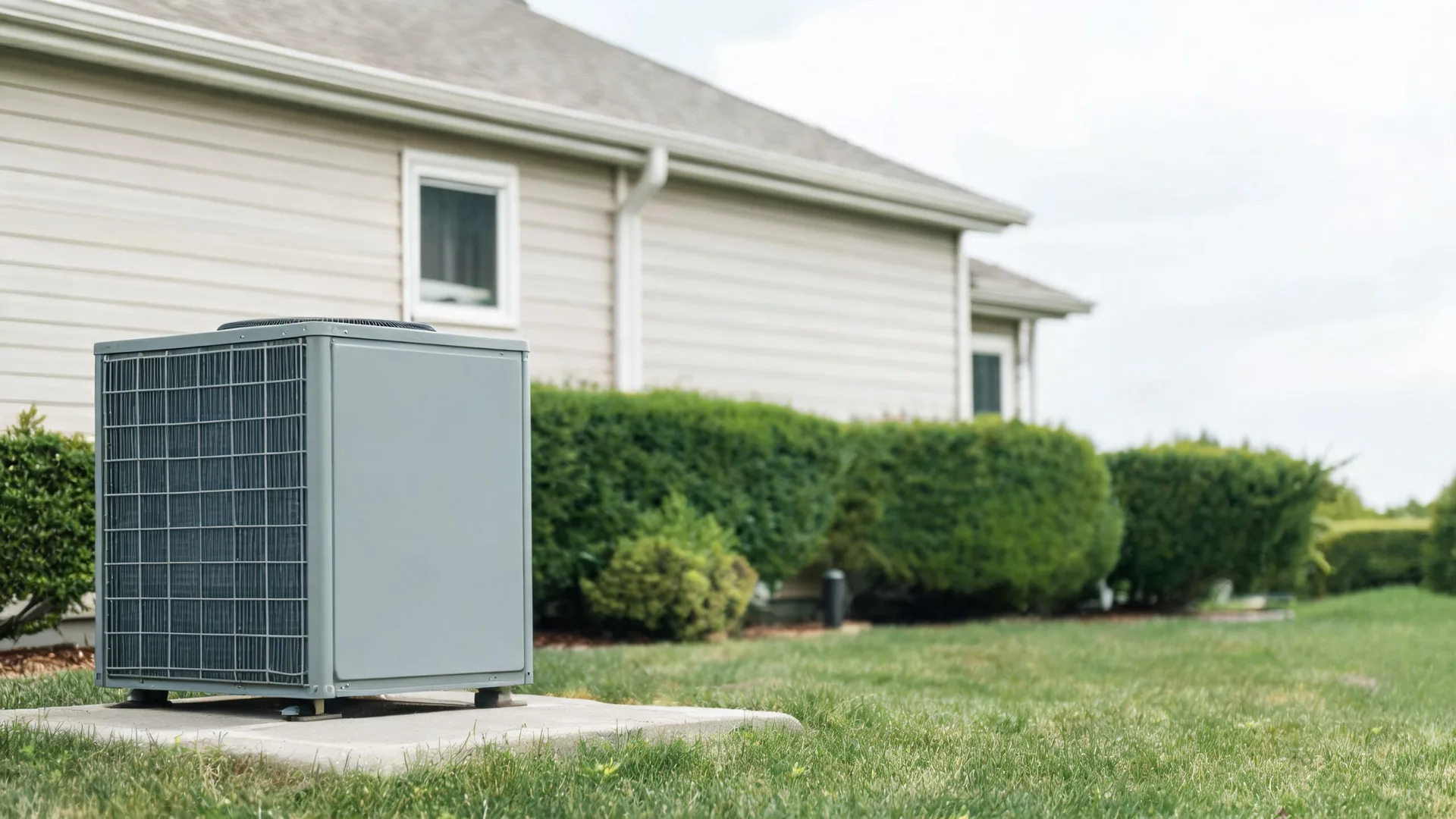
A gray heat pump outdoor unit mounted on a concrete pad next to the stone-accented exterior wall of a house.

What you can check without a tech

Change the filter on a schedule and look at it while you're there. Hold it up to a light. If light barely gets through, it's past due, regardless of what the calendar says. Keep the area around the outdoor unit clear, a couple feet on every side, so air can pull through the coil the way it's supposed to. Pull weeds and cut grass back from the cabinet instead of letting them lean against it. After a hard rain, glance at the outdoor unit for anything resting against the coil or sitting in the base. Inside, keep an eye on the vents and make sure furniture or rugs aren't blocking them, since the system is moving air both directions year round and a blocked return works the compressor just as hard as a dirty coil does. None of this replaces a real inspection. A tech can check refrigerant charge, test the reversing valve, and look at the condensate line in a way a homeowner can't. But between visits, the filter and the airflow around that outdoor unit are yours to watch.

It runs backward part of the year, so wear shows up differently

A heat pump works the same cycle in both directions, just reversed. That means the reversing valve itself is a wear point no furnace or straight AC has. If it sticks, the system can blow cold air when it should heat, or it keeps running in defrost mode without ever satisfying the thermostat. A stuck valve doesn't fix itself, and most homeowners can't tell a valve problem from a thermostat problem by feel alone.
Short cycling is the warning sign most people miss

A heat pump that kicks on, runs a few minutes, and shuts off again isn't cycling normally. That pattern points to low refrigerant charge, a failing capacitor, or a sensor telling the system something is wrong when it isn't. Short cycling wears the compressor out faster than steady runtime does, and the compressor is the one part that turns a repair into a full system replacement.

A quick visit checks that the system runs and the pressures look roughly right. A thorough one pulls the filter, washes the outdoor coil instead of just looking at it, and checks the condensate drain for a slow clog before it becomes a blocked one. It includes testing the reversing valve under load, not just listening for it to click, since a valve that moves fine with no pressure behind it can still stick when the system is actually working. It means checking refrigerant charge against the manufacturer's numbers rather than eyeballing the line temperature. A tech who tightens electrical connections and checks the capacitor readings is looking for the failure before it happens, not after. If the visit takes the same amount of time regardless of the system's age or condition, something is being skipped.

A real tune-up starts outside, at the disconnect, with the power off before anyone touches a wire. From there it's measurements, not glances. Static pressure across the coil, amp draw on the compressor and fan motor, subcooling and superheat checked against what the manufacturer specifies for that unit, not a general rule of thumb. Electrical connections get tightened because a loose one generates heat, and heat is what burns out a contactor. The defrost cycle gets tested too, since a heat pump that can't sense frost correctly will either defrost when it doesn't need to or skip defrosting when it does, and either way the coil suffers for it. None of this takes the system apart. It just confirms the parts that are supposed to be working are actually working.